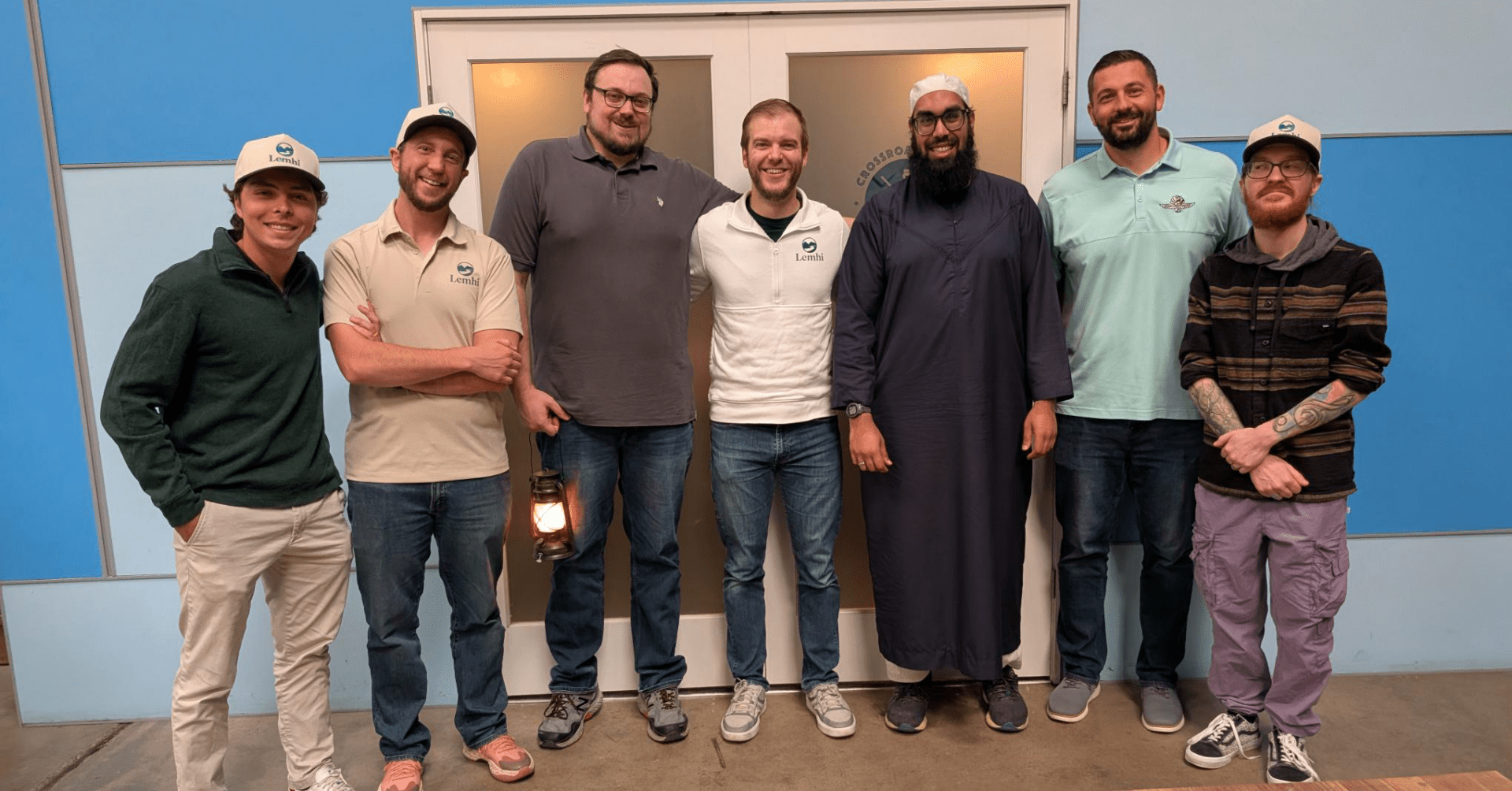
After 15 Years Working With Founders, Tim Hickle Became One
This article is part of a series of profiles highlighting founders across Indiana’s tech community.
Tim Hickle spent 15 years leading marketing and go-to-market teams for other people’s startups before deciding to build his own.
In June 2026, he co-founded Lemhi, an Indianapolis-based artificial intelligence “Transformation-as-a-Service” platform that helps managed service providers turn AI work into a recurring revenue line instead of one-off projects.
We spoke with Tim about why he decided to become a founder, what he had to unlearn and the story behind Lemhi. This interview has been edited for length and clarity.
Was this idea something that was a slow build, or did you just wake up one day knowing you wanted to become a founder?
I think deep down I always knew I wanted to found something, even back in my early 20s at my first tech job. I was deeply involved in the startup scene from the start, including through TechPoint’s events and meetups.
But I didn’t want to found something just to call myself a founder or a CEO. My goal was to build a category-defining software company. Having been part of category-defining companies before, I knew exactly how hard that is to pull off.
Going from marketing leader to co-founder, was there a mental shift that came with the new role?
I’d been around the startup ecosystem for so long that I walked into this thinking I already knew what I needed to know. I’d only ever reported to founders and C-suite executives, so I assumed founding a company would feel familiar.
The biggest adjustment was realizing there’s no one to tell me no. As vice president of marketing, bringing a campaign idea to the CEO used to start a conversation, weighing the idea, getting buy-in, working out the details together. Now, when I bring an idea to John Harden, our CEO, his answer is simple: if I believe in it, I should just do it. That shift, from asking for approval to trusting my own judgment, has been one of the harder parts of the process.
With no one there to tell you no, has there been a mentor you’ve leaned on to navigate that?
I’m lucky to be part of the Indianapolis startup community. I think it’s one of the best in the world, and that doesn’t always get the recognition it deserves, not because of the size, but because of how deep the community runs.
I called on several mentors throughout this process and kept hearing the same advice from different people. One of them, Mitch Causey, a multi-time founder, told me: “At the end of the day, it’s your job. It’s not your job to seek approval or validation, it is your job to grow the business. And if you grow the business, you’ll get all the approval and validation you need, I promise.”
Indiana Founders Network
A peer-to-peer network for tech founders.
What’s something that worked for you as an employee but not as a founder, and what’s a skill you’ve had to build that you never needed before?
I’ve always been a marketing leader, but never a brand-first person. My background is in demand marketing, content, thought leadership and PR. I’ve always had a good eye for brand; I could tell you what worked and what didn’t. But I’d never been the one responsible for building a brand from zero: the name, the logo, the aesthetic and the story behind it.
Of every brand I’ve worked on, Lemhi is the best, because it’s the one I poured everything into. As an employee, it’s hard to feel full ownership of a brand. As a founder, I can’t stop at 80%. This brand is a direct reflection of me and my team, and that pushed me to make sure it was something we could be proud of.
What’s the origin story of Lemhi? Whose idea was it, and how did you and John end up in the same room?
There are five co-founders: myself, John Harden as CEO, Ben Botti as chief product officer, Alex Goodman leading engineering, and Mark Creighton leading customer success. All of us have at least 15 years of experience in our respective fields, but I’m the only one who’s an outsider to the MSP industry.
I’d actually been on a mission to found my own company for about four years before Lemhi came together. My last full-time role was at Greenlight Guru, where I worked alongside a world-class leadership team that built something that defined a category. That experience pushed me to go co-found something of my own.
I knew how much had to go right to make that happen, so I spent close to four years “co-founder dating” people around Indianapolis: working on small projects together, doing fractional work, a lot of coffees and lunches spent just talking through ideas.
John Harden was one of the people I kept coming back to. We’d known each other for over a decade, since I invited him onto a podcast I produced while running go-to-market for Woven, another Indianapolis startup. It was the first podcast he’d ever been a guest on. As we both got more interested in AI, we started getting coffee more often to talk through what we were seeing in the market.

The day John pitched me on what became Lemhi, I’d actually shown up planning to pitch him on a completely different startup idea of my own. Neither of us knew the other had a business plan in hand. We’d just spent a couple of years getting coffee and talking about what excited us, and over time we landed on the same truths about the market. Once that was clear, where to go next was obvious.
What surprised you most once you started talking to MSPs about how they’re actually handling AI with their clients?
What surprised me most was how few MSPs had a real playbook for AI transformation. Right now, there’s a wave of people talking to small and midsize businesses about AI without any background in cybersecurity or data governance, the things that actually matter for AI to be deployed responsibly.
We kept seeing the same pattern: an AI consultant comes in, deploys a couple of solutions without thinking through data governance or security, wraps up a 90-day project and leaves. Three months later, the business goes back to their MSP with a mess to clean up, often with no idea what sensitive data may have been exposed along the way.
Our belief is that putting MSPs in the driver’s seat gives every small business someone responsible for their AI rollout, someone who understands their specific data governance and cybersecurity needs and stays accountable instead of walking away once a project is “done.”
If Lemhi works exactly the way you hope, what does an MSP’s business look like a year from now that it doesn’t today?
Today, MSPs struggle to sell AI as a recurring managed service. A client might mention during a quarterly business review that their team wants to roll out Claude, and the MSP either helps them get licenses set up or runs a one-off project. Once that rollout is done, there’s usually nothing left to do, because security, governance and expanding use cases were never part of the plan.
With Lemhi, when a client asks about AI, the MSP can walk them through a defined process: build a 12-month AI roadmap, identify the highest-impact use cases, map out the cybersecurity and governance needs specific to their business, then show measurable progress over time.
For the MSP, that means charging a monthly recurring retainer instead of a one-time project fee, a meaningful shift in the value of their business, plus a high-margin service line that differentiates them and makes it harder for competitors to poach their clients.
Lemhi is still new, but Hickle’s path to it was deliberate. He spent years learning from other founders, testing ideas, growing his skillset and looking for the right collaborators. Now, the same community he credits with getting him here is the one he’s building for next.
Register for Venture Connect by October 1
It’s like speed-dating between startups and investors. Find your match November 4.