How Michael Zwach and Azara Energy are Rethinking Electrical Safety for the EV Era
This article is part of a series of profiles highlighting founders across Indiana’s tech ecosystem. This interview has been edited for length and clarity.
Michael Zwach didn’t set out to become a founder, but looking back, his family isn’t surprised. The co-founder and CTO of Azara Energy grew up as the kid selling candy bars on the elementary school playground. That independent streak followed him through an electrical engineering degree at Purdue University, a stint at NASA, and a co-founding role at an asteroid mining start up. Eventually, it led him into the EV industry at Rivian Automotive.
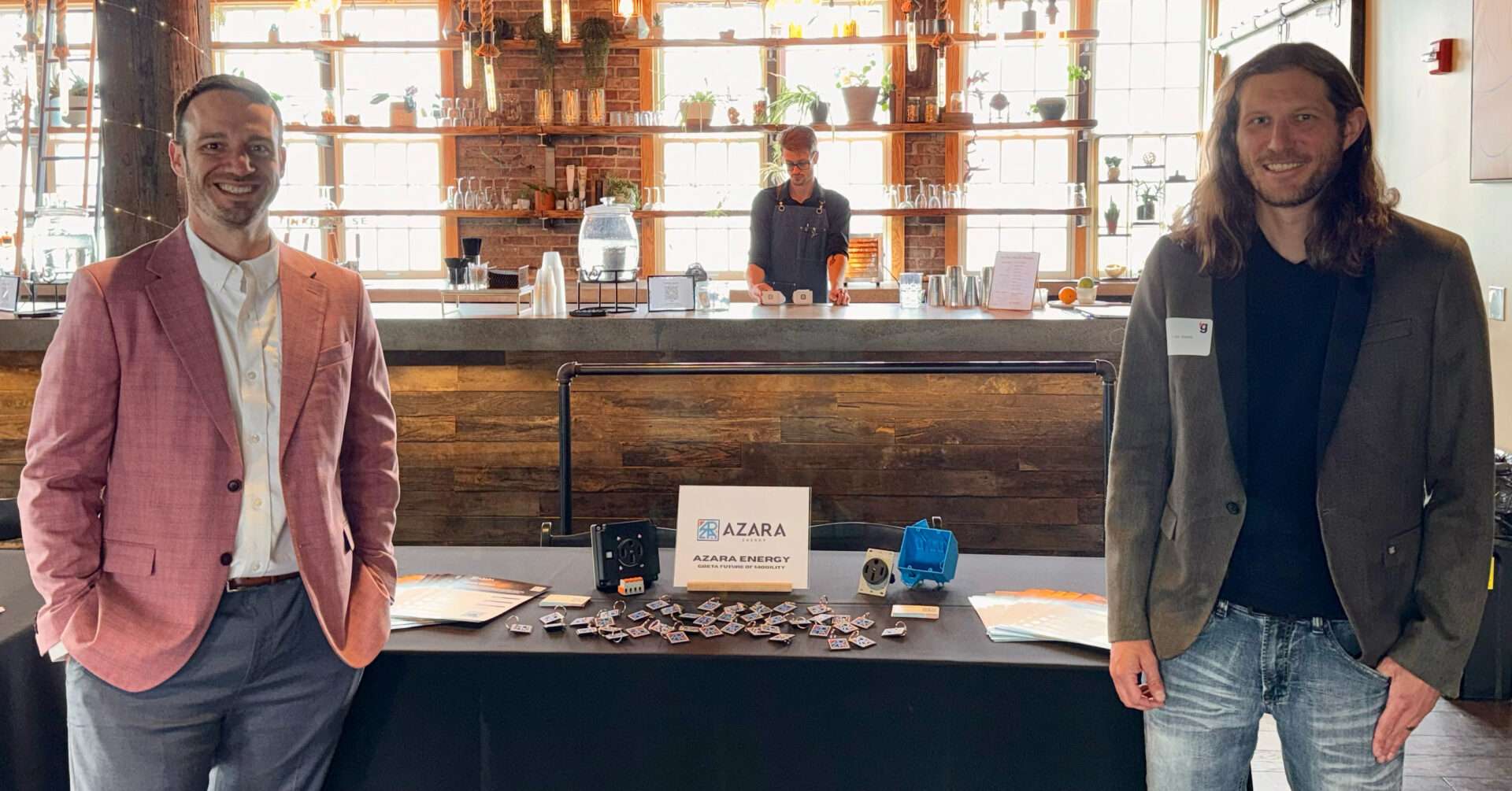
It was there that he saw the problem that would become Azara Energy. EV chargers were failing: melting, smoking, sometimes even catching fire. He set out to build a thermal-monitored electrical outlet designed to catch these failures before they turn dangerous. Now based in Fort Wayne, Zwach is building hard tech in a state, and an era, more tuned to software.
Tell me a little about yourself and Azara Energy as a whole – what’s that been like for you?
I live in Fort Wayne, Indiana – been here about three years now, relocated with my family from California. I originally came to Indiana to attend Purdue University, where I met my wife and graduated in 2013.
At Purdue I got interested in entrepreneurship through their certificate program, and I was heavily involved in aerospace as an electrical engineering major. I worked at NASA, in California, during undergrad and assisted in the launch of Deep Space Industries, an asteroid mining company, while still in school. It sold to Bradford Space around 2019, not the most lucrative exit, but a good way to hand off the technology.
After that I spent about ten years doing entrepreneurship inside the corporate world. Azara Energy came from an opportunity I saw joining the EV sector at Rivian in 2020. I joined every social media group I could find to connect with the customer base, and one problem kept coming up: people charging their vehicles at home and running into electrical failures. That was the seed of Azara Energy, back in 2020 and 2021.
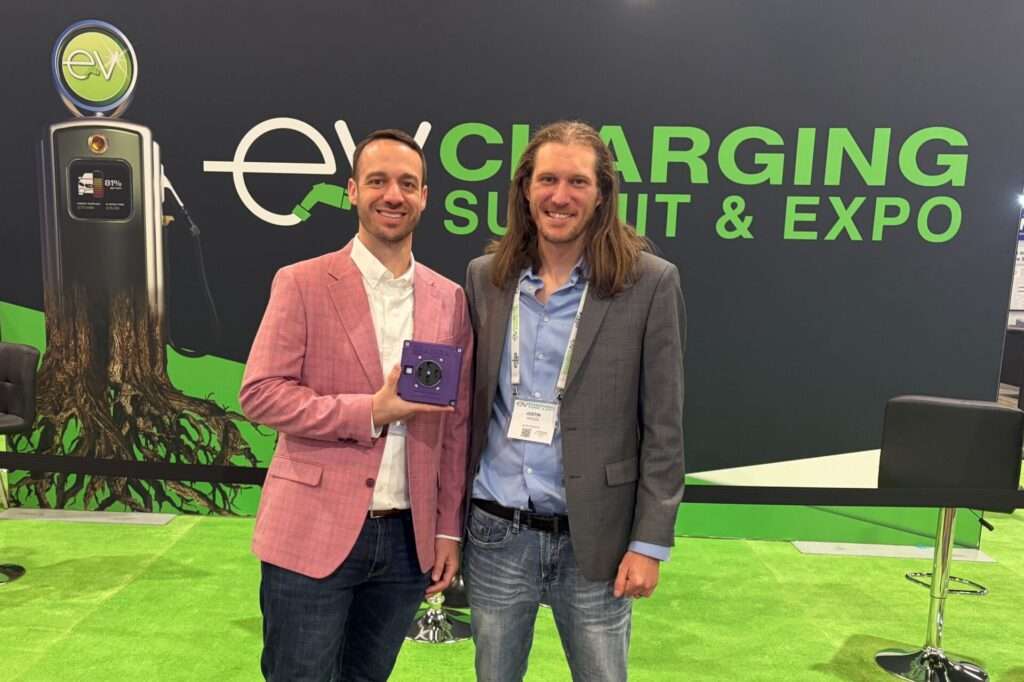
At the time I figured the industry would solve it on its own, so I let it sit. It wasn’t until I was catching up with Justin Ciples, a friend from Purdue, in Indianapolis, that I resurrected the idea. We started building a thermal-monitored electrical outlet, since a lot of these home outlets were installed 10 or 20 years ago and nobody checks them before an EV charger starts putting real load on them.
How did your background in electrical infrastructure and EV operations prepare you to be a founder, and what did it not prepare you for?
I wear the inventor hat well, that’s my happy place. What it hasn’t prepared me for is the soft skill side: social media marketing, investor newsletters, building sales channels, calling electricians about their tooling and pain points. Honestly those are probably more important than the invention itself.
My electrical engineering degree and my master’s in systems engineering have been huge for solving the technical problem, understanding Underwriters Laboratories (UL) requirements, setting up manufacturing. The raise and the go to market have been the steeper climb.
What’s been the hardest part of turning the idea into a working product?
The product hasn’t been the hard part. I’ve built prototype electronics out of my garage, soldering, all of it.
What’s harder is getting to something fully power capable at volume, since that’s where the real expense hits. Prototyping a handful of units is very different from production level manufacturing.
That’s pushed the harder work toward building an investment base and getting electrician feedback to make sure we’re solving the right problem. Building the company has been tougher than building the product.
Your product covers EV charging, RV parks and other high power applications. What’s it like designing one product for so many industries?
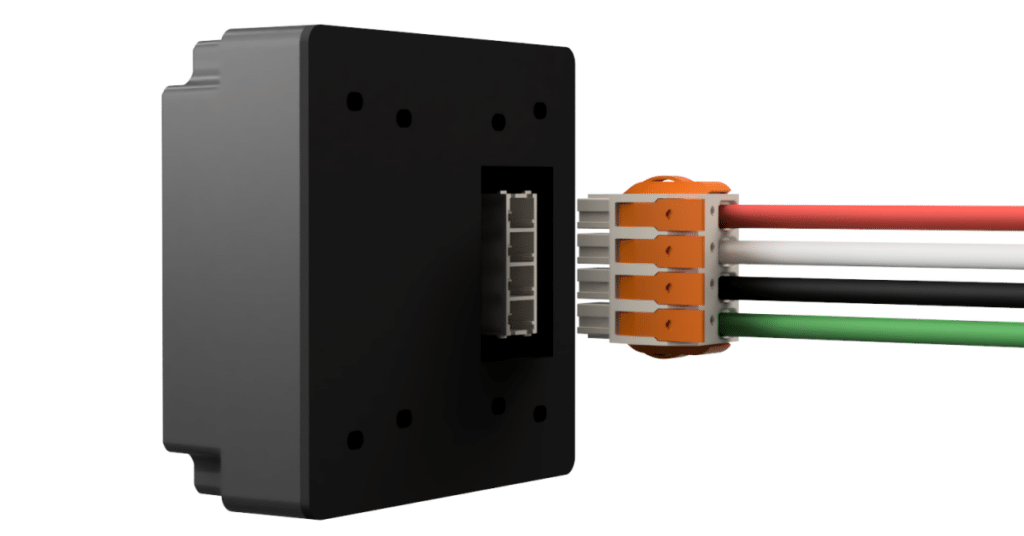
The receptacle has already become the universal way to deliver electricity across sectors, so a lot of that standardization was already done for me. Our most common product uses the 14-50 receptacle, which people recognize from home dryer outlets or RV power pedestals at a campground.
Each market still has its quirks. Weatherproofing matters more for a campground or marina than inside a garage, so it comes down to understanding each customer base’s specific thresholds.
As CTO and co-founder, how do you balance building for today’s infrastructure with where power demand is heading?
It’s a balancing act. A lot of the industry is still figuring out vehicle to home and vehicle to grid setups, so I keep one eye on the future while staying grounded in today’s problems. Building a roadmap has helped, figuring out what we can solve now versus what the market will need next. We’ve worked with groups here in Indiana, like Glassboard, to build that roadmap and plan how new features can expand our addressable market over time.
Looking back, is there a decision you’d approach differently?
Nothing that feels like a hard regret, but there have been learnings. We recently converted Azara Energy from an LLC to a C-Corp. We held off earlier because the C-Corp brings more compliance overhead and we wanted to file our IP first. It ended up taking longer than expected, and in hindsight, converting sooner would have made raising capital easier. I’d also push our roadmapping work earlier.
Did you always know you wanted to be a founder, or did this come about when you saw the need?
Not specifically a founder, but I’ve always had my own ideas and my own way of doing things. My dad used to joke that I was the kid buying candy bars at Sam’s Club to resell on the playground. My family wasn’t surprised when I started a company. Finding the right moment to actually do it was the harder call.
Indiana isn’t always associated with hardware or energy startups. What’s it been like building here?
There have been real challenges, especially now, when there’s so much appetite for quick software companies. It’s harder to build enthusiasm for a physical product, since it takes so much more to design well, manufacture at reasonable cost and scale.
That said, the networking has helped a lot. I’m down in Indianapolis often, and we went through the gBETA future mobility program this spring, which built strong local connections. It’s been time consuming and a little exhausting to find and maximize the opportunities that exist for hard tech specifically.
Groups like the Indiana Founders Network, TechPoint, Elevate Ventures and gBETA have all helped ground the work through community. What’s missing are events geared toward venture ready, capital intensive companies building products meant to sell in all 50 states. Most programs feel more industrial or narrowly focused.
What’s something you’d want people to understand about outlet safety?
Most people assume electrical safety is solved, that fire risk isn’t really a thing anymore, outside of the occasional holiday reminder about not overloading an outlet near the tree. That’s not the case. We have the technology now to build something like Azara’s outlet, which acts almost like a watchdog in places people aren’t thinking about.
Electricians should still be the subject matter experts people turn to. But I’d also just ask people to take an extra moment when they’re plugging in something that draws serious power, like an RV, a boat, or an electric car. A whole house typically has about 18 kilowatts of capacity, and a level two home charger can draw 9 to 10 kilowatts of that, roughly half your house’s total power. It sounds abstract until you put it in context.
For someone who didn’t set out to be a founder, Michael Zwach has built a career out of noticing problems other people have learned to live with. First in aerospace, now in the outlet behind your garage wall. Azara Energy is as much a bet on hard tech finding its footing in Indiana as it is a bet on electrical safety catching up to the demands of an electrified world.
Register for Venture Connect by October 1
It’s like speed-dating between startups and investors. Find your match November 4.