
AI initiatives rarely stall because the technology isn’t powerful enough. They stall because the foundations underneath adoption aren’t ready.
Across industries, most organizations are experimenting with AI, but when it comes time to implement at scale, progress slows when data is fragmented, processes aren’t documented, ownership is unclear, and governance is inconsistent.
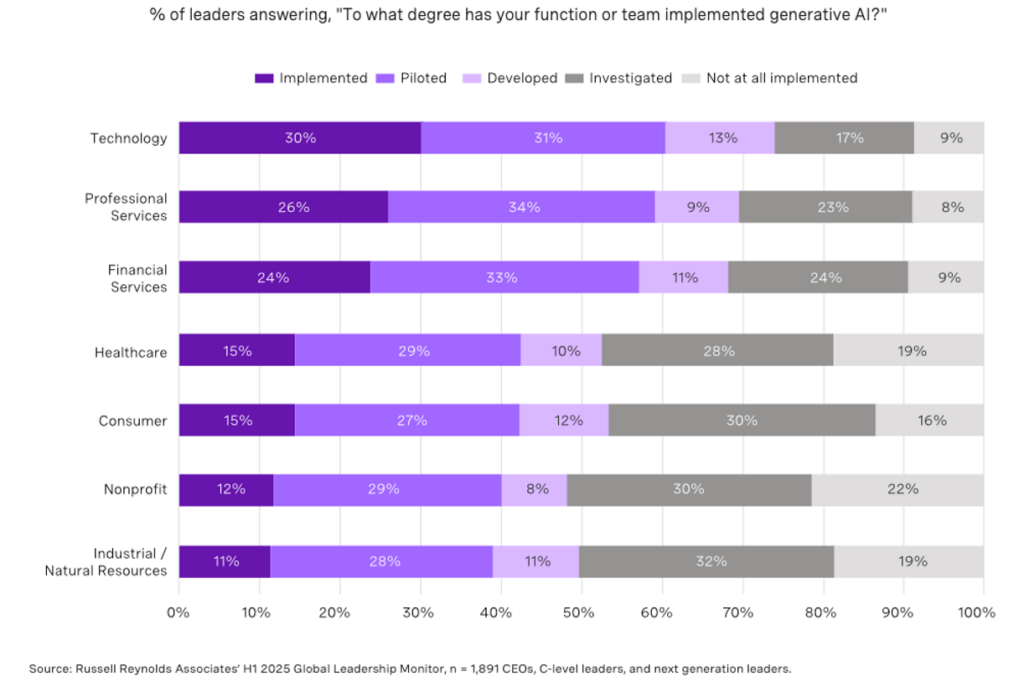
Many teams know what needs to be fixed; far fewer can meaningfully prioritize it. The tension between readiness work that matters and the lack of time, structure, or capacity to do it sets the stage for the talent opportunity.
The Readiness Tradeoff: Innovation Competes with Execution
AI adoption is landing on top of already-full plates. Teams still have to deliver near-term outcomes, keep operations running, and hit quarterly goals while also learning new tools, rethinking workflows, and experimenting responsibly. Learning takes time and experimentation carries risk, so without deliberate upfront investment, transformation consistently competes directly with, and loses to, execution.
The Experience Gap is Widening as AI Reshapes Entry-Level Work
Employer needs are shifting from can you do the task? to can you deliver outcomes amid ambiguity? The scarce capability is execution capacity: clear communication, expectation-setting, ownership, and the ability to move messy foundational work forward with minimal direction.
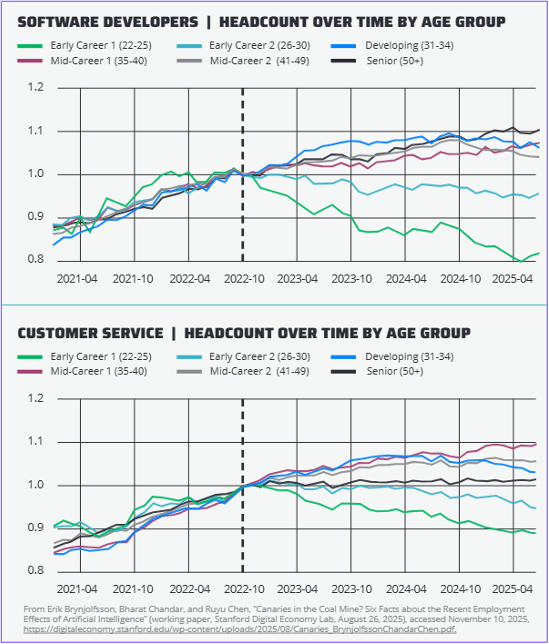
At the same time, labor-market signals in AI-exposed roles show opportunity redistributing toward experienced workers while early-career demand declines. This is making experience more valuable at the exact moment it’s harder to build.
AI Changes What Creates Value
AI is increasingly effective at handling codified work: routine, rules-based, well-documented tasks. Historically, those tasks served as the on-ramp for early-career talent. What remains (and what organizations still need) is work that requires judgment, coordination, and context; tacit capability built through responsibility inside real systems. Higher education can teach fundamentals and problem-solving frameworks—what’s missing is structured opportunity to apply that knowledge in production environments.
The Backlog: Foundational Work That AI Depends On
Pressure to adopt quickly, without increasing operational risk, creates a predictable backlog of essential work: documenting processes, cleaning and connecting data, testing use cases, and supporting change management. This work is critical to scaling adoption, but it’s often deprioritized when senior teams are focused on delivery and growth.
A Practical Lever: Early-Career Talent as a Low-Risk, High-Upside Capacity Strategy
Early-career talent, when intentionally paired with foundational work, can strengthen AI readiness while building capability at the same time. Individuals gain context, judgment, and accountability by doing work that matters. Organizations gain capacity and momentum on work that needs to get done anyway. Framed correctly, this is a low-risk, high-upside strategy—not “extra help.”
Concrete examples include:
- Data cleanup and reconciliation when key data lives across multiple systems and trust is low
- Process mapping and documentation when workflows exist only in people’s heads
- Identifying where handoffs break, where assumptions fail, and where risk is introduced
The output is reusable organizational assets—foundational work that AI initiatives depend on.
Indiana’s near-term advantage
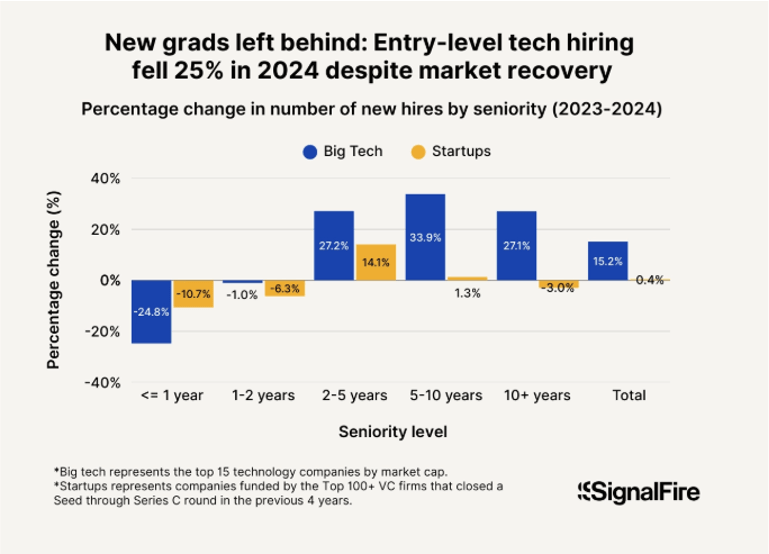
With entry-level hiring down at major tech firms in recent years, Indiana employers have unusually strong access to early-career talent. Combine that with evidence that many Gen-Z workers value learning, growth, and impact, and meaningful early-career responsibility becomes both a capability play and a retention lever.
The Operating Move: Make the Invisible Work Visible, Then Design For It
The work isn’t missing, it’s under-scoped and easy to overlook because it shows up as band-aids, manual workarounds, and institutional knowledge trapped in individuals.
The next step is to name the foundational work that’s slowing teams down (documentation gaps, cleanup, testing, process clarity), then design roles and bounded projects that allow it to get done. Interns and apprentices won’t be an organization’s AI strategy, but they can materially move the foundational themes that otherwise keep slipping to next quarter.
More From Community Connect
Readiness to Results in the Age of AI: Four Imperatives for 2026
TechPoint Releases 2025 Venture Report, Announces Deal of the Year Finalists for Mira Awards