One Opportunity at a Time: Nick Fishel’s Journey to Computer Science
This article is part of a series of profiles of this year’s Mira Awards finalists across a variety of categories. Read about all of the 2026 Mira Finalists in our digital event program.
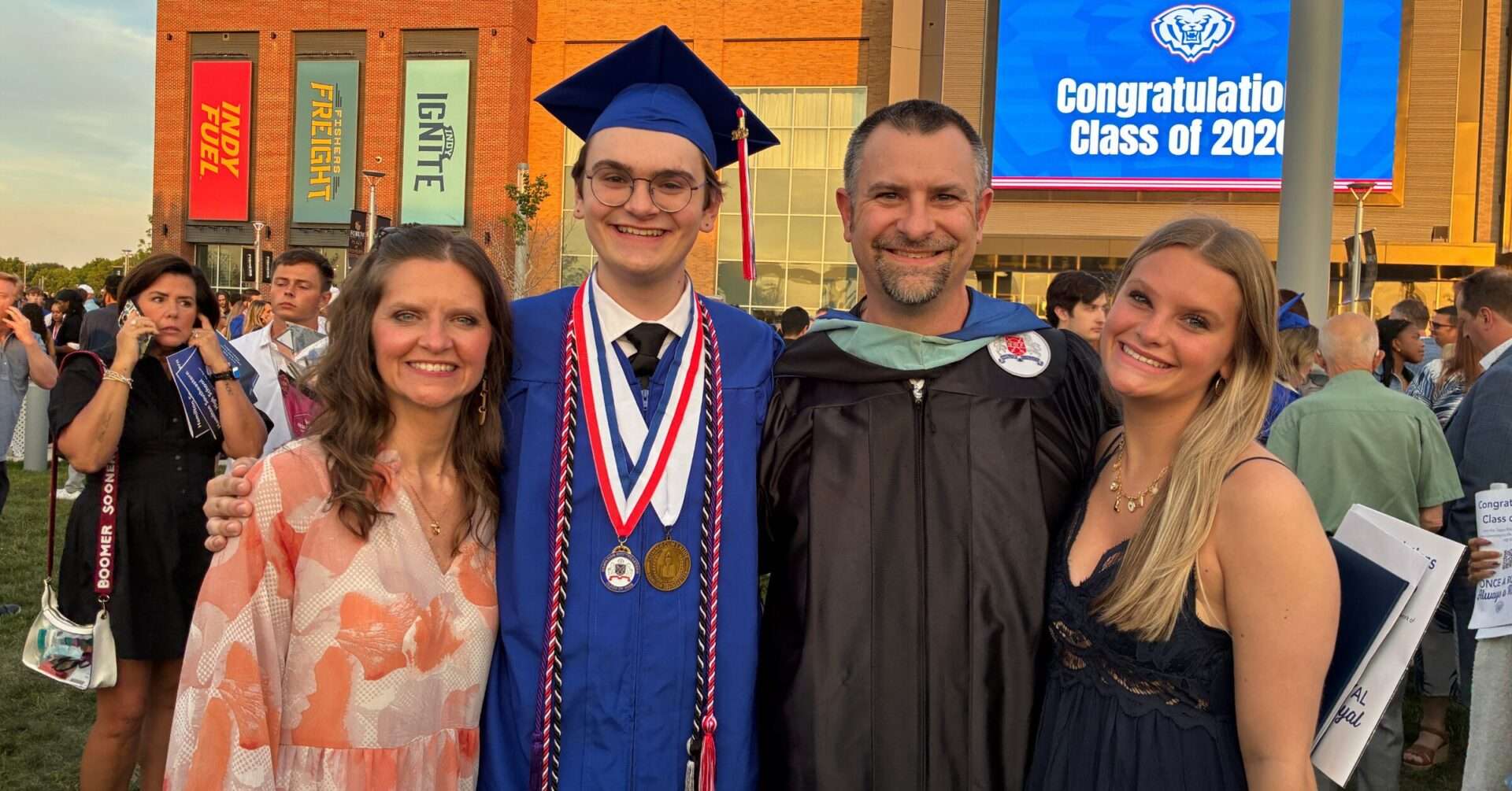
Nick Fishel, a computer science teacher at Hamilton Southeastern High School, was one of four finalists for the Nextech Computer Science Teacher of the Year Award at this year’s Mira Awards. It’s a fitting recognition for someone who used to joke that if he won the lottery, he’d become a teacher. Life took him there a different way.
A Detour on the Way to the Classroom
Fishel graduated from Purdue with a degree in business management and a minor in information systems. He entered the private sector first, drawn by the financial stability it offered and the chance to eventually give something back to the university. Teaching, though, never fully left his mind. When the company he worked for closed, he found himself taking on side jobs and rethinking what he actually wanted out of his career. That stretch of uncertainty ended up pointing him toward something that felt more worthwhile.
That realization sent him back to school for a master’s degree in secondary education with a focus on mathematics. He began his teaching career in math classrooms, but his information systems background eventually pulled him toward computer science after he was asked to help maintain his school’s website.
Building a Teaching Path One Opportunity at a Time
Fishel taught math exclusively for his first six or seven years at Greenfield Central. That changed when Project Lead the Way introduced a digital electronics course covering basic circuitry and logic, and Fishel took it on.
Years later, a math position opened at Hamilton Southeastern, the district his own kids attended. Fishel applied hoping to simply be in the same school system as his children.

But during his interview, the hiring team noticed his Project Lead the Way and web development experience and asked if he’d ever considered teaching computer science. He had, but Greenfield Central had never been able to move him out of the math classroom. At Hamilton Southeastern, he got his chance, starting with an intro to computer science course and eventually building a website and database development class around his information systems background.
Today, Fishel is one of two full-time computer science teachers at Hamilton Southeastern, a setup he knows is rare. Many districts leave the entire computer science load to a single teacher. Looking back, he says the breadth of what he now teaches, from computer science to networking to web development, was never a plan. It simply grew, one opportunity at a time.
Curiosity Over Compliance
Teaching teenagers in a field that changes as fast as computer science comes with challenges, but Fishel’s approach has stayed consistent: focus less on grades and more on getting students genuinely interested in what they’re building. Unlike math, where the curriculum can feel rigid no matter a student’s interest, computer science gives him room to let students chase their own ideas. Whether that’s an app, a webpage, or a project tied to something they’re already passionate about, it’s an opportunity to apply their learning to a real project.
That mindset helps him work through one of the biggest misconceptions students bring in on day one. Many students who sign up for computer science are avid gamers, and they assume a class about computers will be a class about building the games they play. While some coursework does involve building games, students quickly learn how much work goes into even a simple one. Fishel is upfront: nobody leaves his class able to build the next Fortnite or Minecraft. Those games take entire teams of developers and understanding that scope is part of the lesson.
That shift in expectations doesn’t always disappoint. Fishel remembers a student who assumed he wouldn’t enjoy the course at all, then found real interest in helping maintain the school’s news networking webpage. That student has stuck with it for years and hopes to turn it into a career.
Training the Next Generation of CS Teachers
Fishel’s influence reaches well beyond his own classroom. When he first started teaching computer science, he used the code.org curriculum, a widely used set of free computer science lesson plans for K-12 classrooms, and attended a training session to learn it. That experience planted an idea: he could help other teachers do the same. He reached out to the regional training partner and offered his help, and the opportunity grew from there.
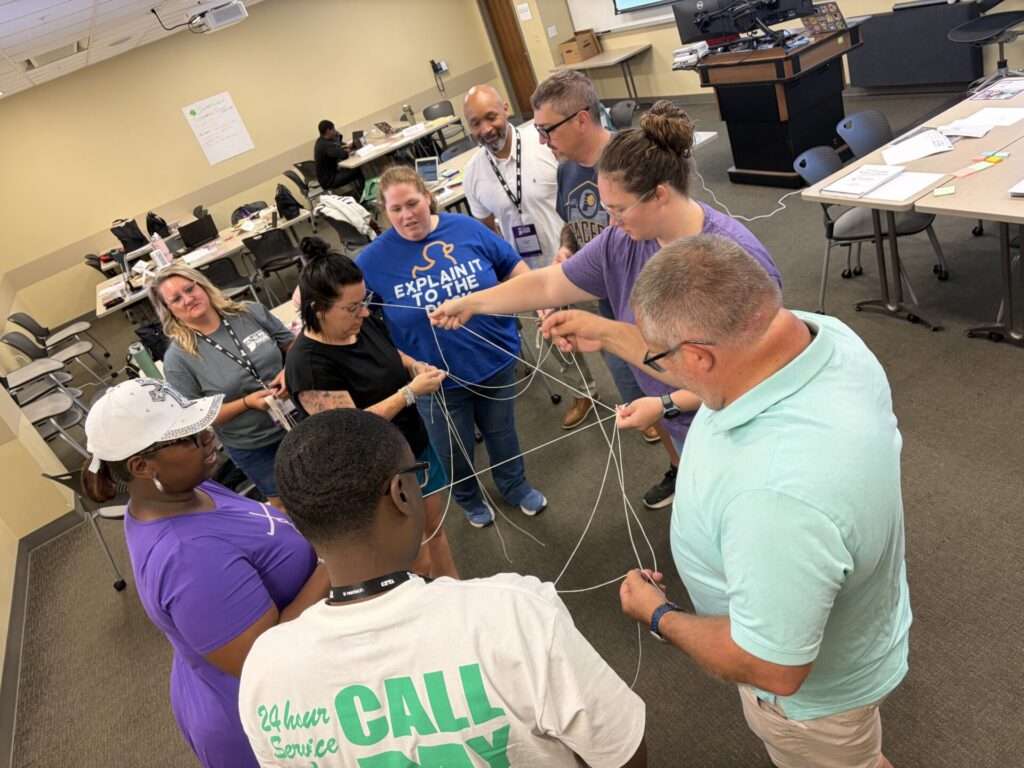
Now he leads at least one week of training every summer in Bloomington, primarily for Indiana teachers, though educators from other states often attend too. He’s also led workshops in Kansas City and recently became a facilitator for AP Cybersecurity through the College Board; a role he hopes will let him reach even more teachers nationally.
For teachers new to computer science, Fishel’s core message is simple, “It’s okay to not know everything. Many new CS teachers land in the subject simply because it falls under their school’s math or business department, and the pace of change can feel intimidating. Nobody understands it all, documentation exists for a reason, and it’s fine if a student knows more about a topic than the teacher does.”
Trading Stability for Something Worth It
The shift from math to computer science wasn’t easy. After twelve years at Greenfield Central, including teaching AP Calculus and AP Statistics, Fishel had his courses down to a routine, and the material rarely changed. Moving into computer science meant trading that stability for constant adaptation. He admits there was even a nagging sense that leaving advanced math for an intro-level subject might look like a step down.
But the tradeoff has paid off. Students in his computer science classes are typically there because they want to be, not because it’s a graduation requirement, and that motivation has made the constant change easier to embrace.
Navigating the AI Shift
That change has only accelerated with the rise of AI, something Fishel calls one of the trickiest and most exciting shifts he’s had to navigate. AI can already write code well, which is pushing classroom focus away from writing flawless code and toward understanding how that code works and how to adapt it. He’s still figuring out exactly how AI fits into his curriculum, but he’s already using it productively, including helping students brainstorm when they’re stuck or compare their own solutions to what AI generates.
That same curiosity is what he hopes every student carries forward, whether or not they go into tech. Computer science rarely has one correct solution, and being willing to experiment and learn from getting it wrong matters more than following a fixed process.
What Keeps Him Going
Staying motivated in a career where impact isn’t always visible is something Fishel has had to learn to sit with. Teaching doesn’t come with the salary of a tech career, and most people like himself do it for the students.
What sustains him are the smaller moments: a note, or an unexpected message years later. He recalls hearing from a former algebra student who reached out just to say how much she appreciated his teaching, someone he hadn’t necessarily felt he’d made a strong connection with at the time.
Fishel was named one of four finalists for the Nextech Computer Science Teacher of the Year Award at this year’s Mira Awards. His first reaction was surprise. Years of facilitation work have shown him how many talented computer science teachers are doing similar work across the state, so being named a top finalist felt humbling, and a reminder that impact is happening when teachers don’t always see it.
A few career moments stand out. Early on, one of his Project Lead the Way students went on to the Coast Guard Academy and later told Fishel that the same software they’d used in class gave him a head start. He’s also been selected by students at academic excellence nights, where students choose the teacher who influenced them the most.
Looking Ahead
As Fishel looks toward the future of the field, he wants students and fellow teachers alike to know that while AI is reshaping tech jobs, the need for people who understand how these systems work isn’t going away. He encourages his students to stay curious and unafraid to experiment, admitting he hasn’t got AI fully figured out either, but he isn’t afraid to try.
For Fishel, computer science is a skill set that reaches far beyond one career path. Even students who become doctors or pursue other fields can carry the problem-solving and modeling skills they learn in his classroom. At the end of the day, what keeps him going is simple: watching a student’s understanding click into place, and seeing them try something new because of it.
Want to see the full list of this year’s honorees? Check out the 2026 Mira Awards digital program here.