Students Provide Real-World AI Solutions at TechPoint’s XTERN Challenge, Hosted by Cummins
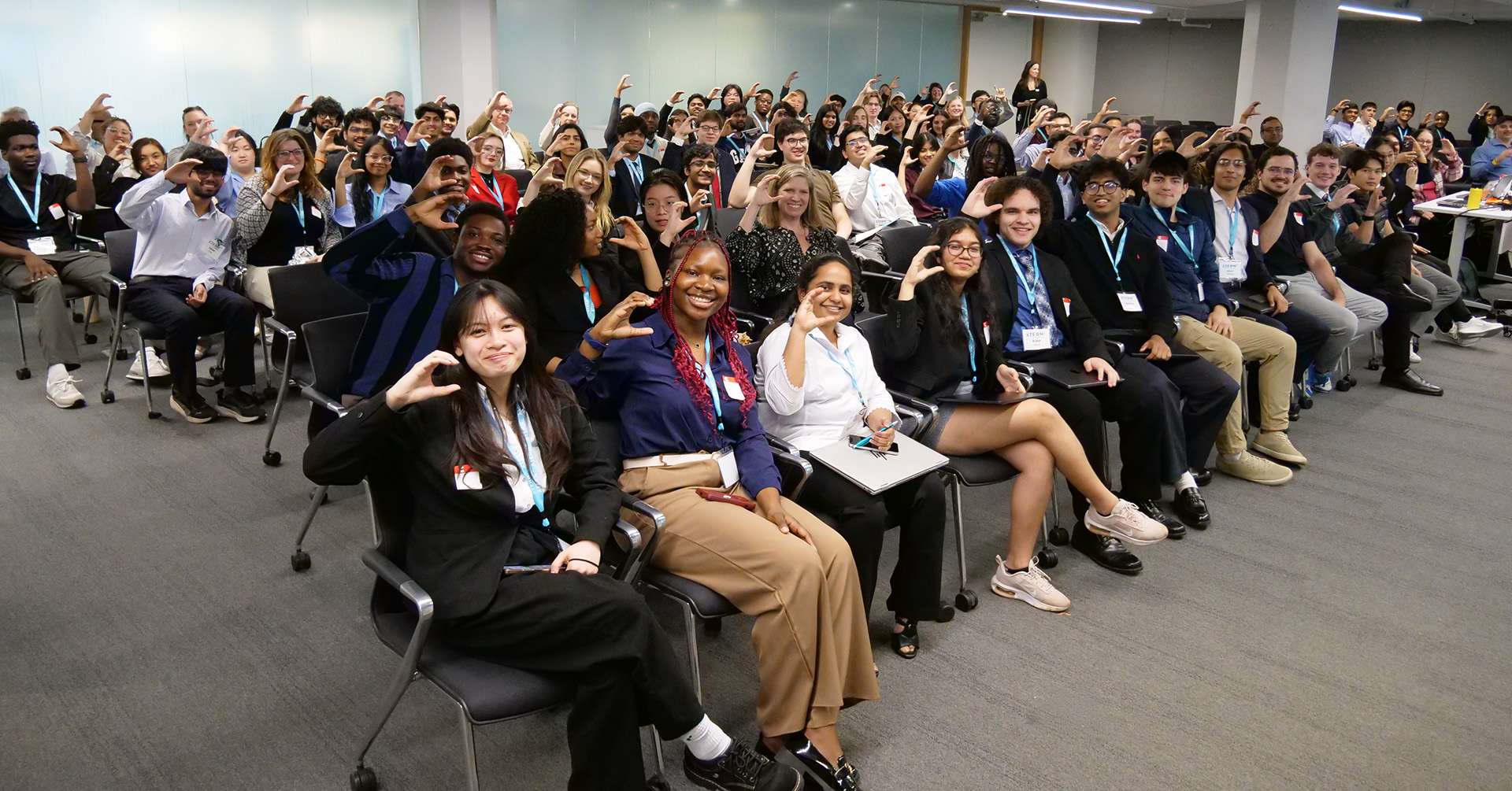
TechPoint’s latest XTERN Challenge brought together 100 students from colleges and universities across Indiana to take on real-world enterprise AI problems, developed with Cummins.
Designed as a work-based learning experience, XTERN Challenge gives students the opportunity to collaborate across schools, apply their skills to real business problems, and gain exposure to the kind of teamwork, technical thinking, and communication required in the workplace. Cummins’ challenge pushed that model further, asking students to solve complex problems tied to AI systems, service workflows, and business operations.
TechPoint selected the 100 participants from over 200 qualified applicants. Students qualified based on readiness for the challenge, a range of experience levels, and representation from as many universities as possible. Once selected, organizers then placed them into cross-university teams and spent several weeks working together remotely to build their solutions ahead of final presentations in Columbus, IN.
Cummins helped shape the experience from the beginning. The company partnered with TechPoint to create two challenge prompts: Enter the Matrix: Fortune 200 Edition, focused on enterprise agentic AI systems, and Service Engineering Reboot, focused on AI-assisted service workflows for technicians. Throughout the challenge period, students also had access to support from Cummins through Q&A sessions and ongoing guidance.
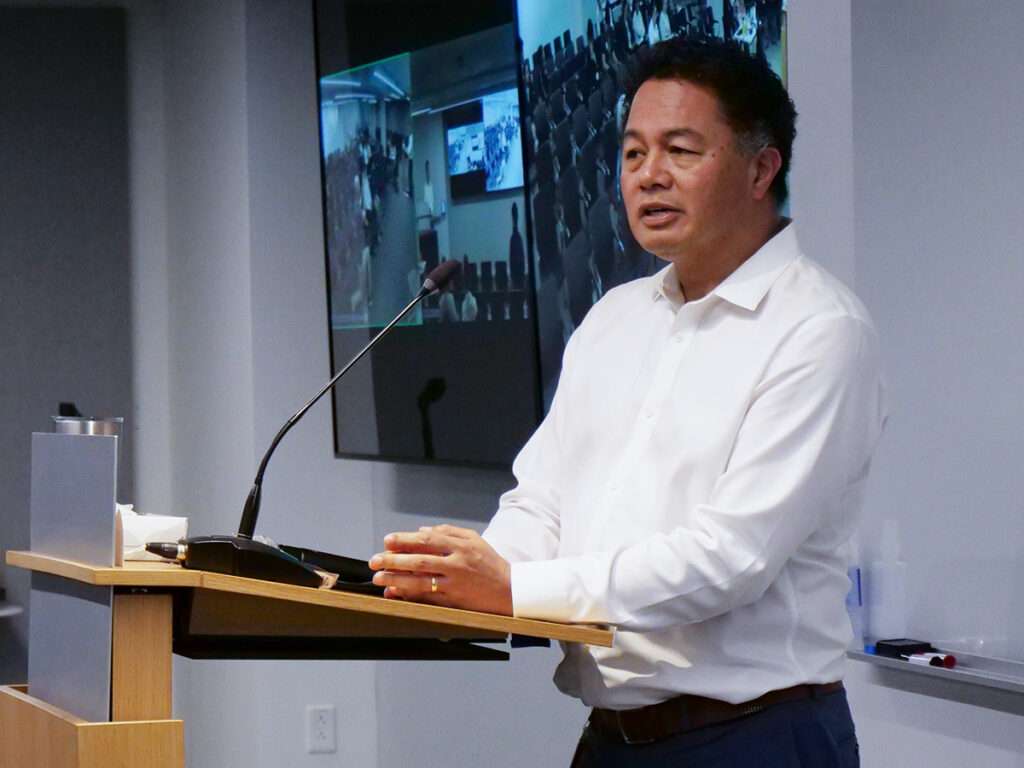
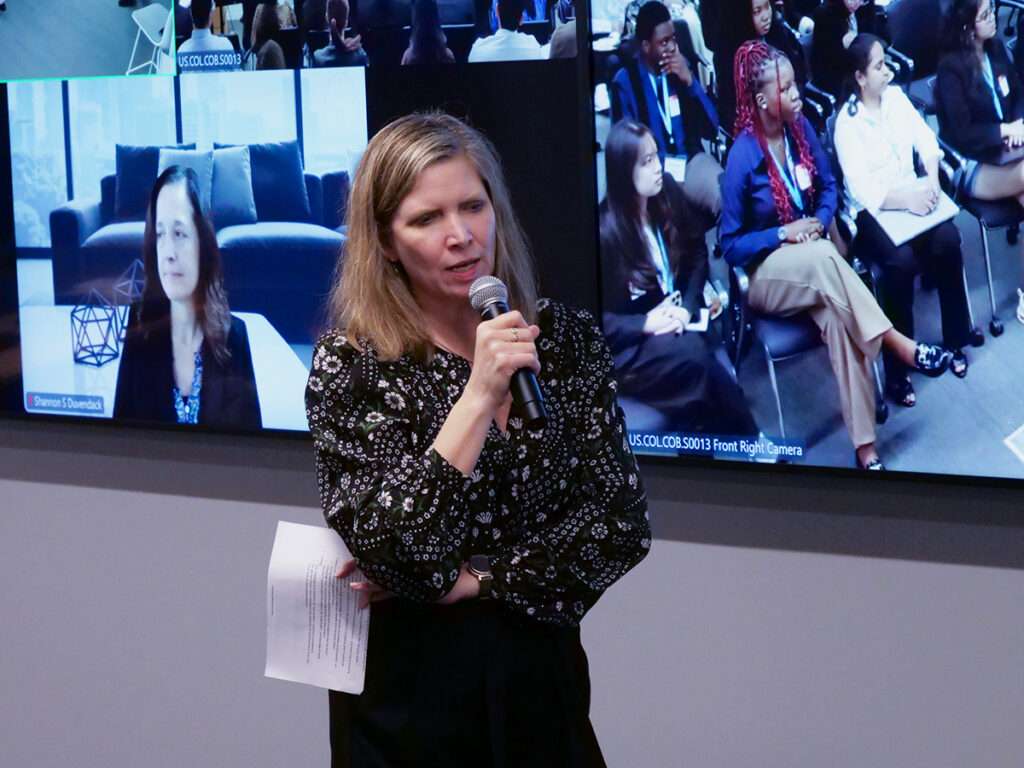
Final presentation day took place March 6 at Cummins in Columbus. Cummins CEO Jennifer Rumsey spoke to the participants before kicking off their presentations in front of live judging panels made up of Cummins professionals across AI, engineering, operations, and business leadership. Throughout the day, Cummins also provided a speaker track, with team members sharing expertise on a wide variety of topics.
After a day of presentations, judges recognized first-, second-, and third-place teams in both challenge tracks, along with honorable mentions.
Service Engineering Reboot
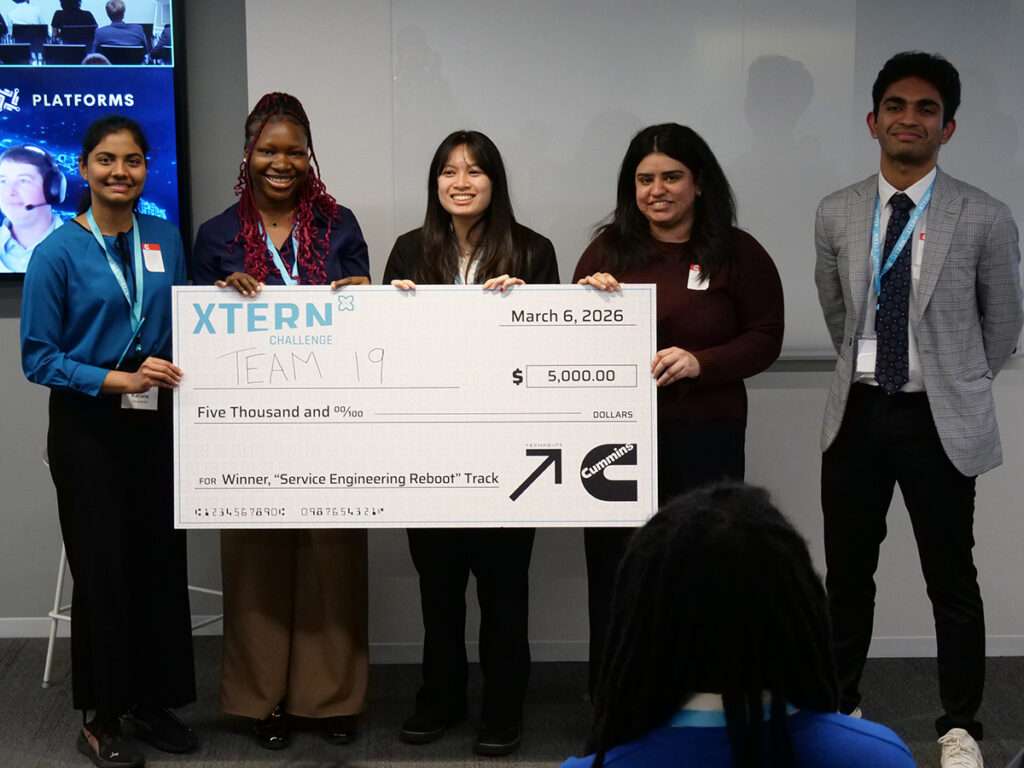
First Place
Karuna Saravanan (Indiana University Indianapolis), Inioluwa (Tina) Oyatobo (Indiana University Indianapolis), Kyra Truong (Indiana University Indianapolis), Mannandeep Caur (Purdue University), Nishad Patel (Purdue University)
Team 19 earned first place for SNIMMUC, an AI-powered decision-support system designed to help technicians interpret complex diagnostic data, troubleshoot more effectively, and make more confident repair decisions. The concept emphasized practical technician support, pairing AI-guided insights with the guardrails needed for safe, accountable decision-making in the field.
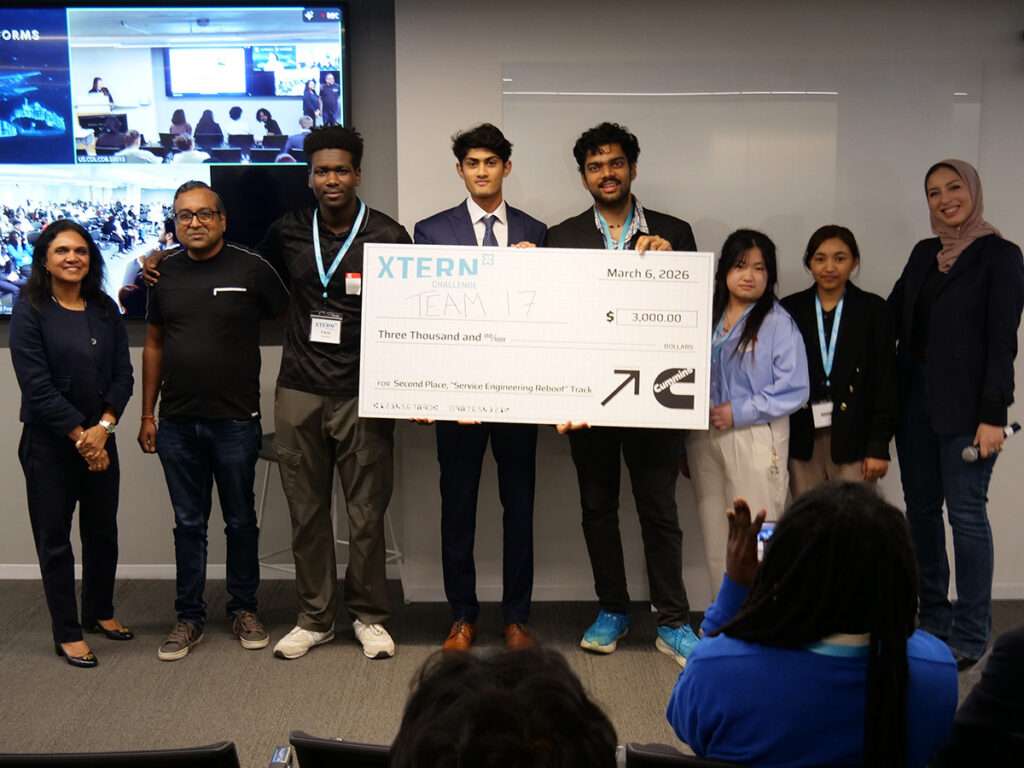
Second Place
Faris Ibrahim (Purdue University), Ahaan Kothari (Rose-Hulman Institute of Technology), Venkata Karthik Konduri (Indiana University Indianapolis), Key Weng (Indiana University Indianapolis), Iota Shrestha (Purdue University)
Team 17 took second place with FieldAssist, an AI-enabled platform built to support technicians with diagnostics, repair guidance, and safer, more efficient field service workflows. Its design reflected a strong understanding of real service conditions, including the need for reliable support, clear escalation paths, and better field readiness.
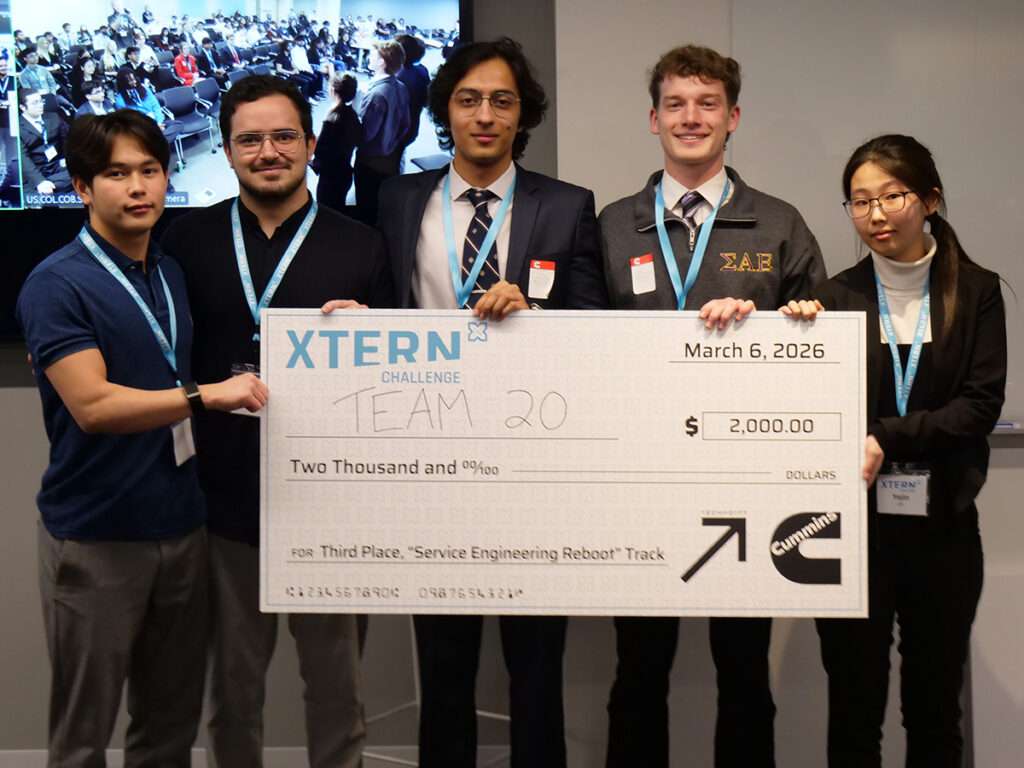
Third Place
Ibragim Tleukulov (DePauw University), Adam Amar (DePauw University), Mian Abdullah (DePauw University), Nathan Vujaklija (Franklin College), Yejin Oh (Purdue University)
Team 20 placed third with Cummins Tech AI, a service support concept focused on guided troubleshooting, faster access to relevant information, and more efficient field service decision-making. The project centered on making technical knowledge more usable in the moment, helping technicians move more quickly from issue identification to action.
Enter the Matrix
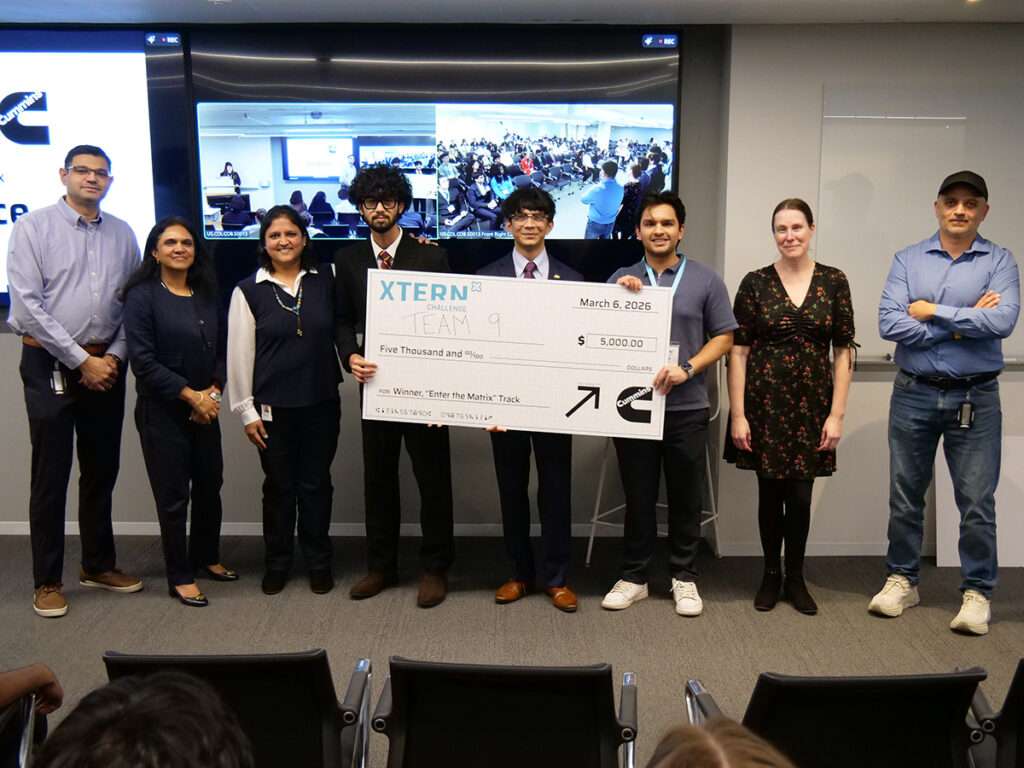
First Place
Ameya Shukla (Purdue University), Tanay Patel (Purdue University), Samip Devkota (DePauw University)
Team 9 earned first place for Disrupt IQ, an AI-native disruption response planner designed to help warehouse and supply chain managers respond faster and more consistently to disruptions through a multi-agent, human-in-the-loop workflow. The project stood out for its clear focus on real operational decision-making, helping users evaluate options quickly while maintaining oversight and auditability.
Second Place
Vikram Kavalipati (Purdue University), Sanketh Patil (Purdue University), Seno Sanjeev (Purdue University), Somya Sakalle (Purdue University), Sinclair Nzenwata (Ball State University)
Team 10 took second place with Prescriptive Maintenance Dispatcher, a multi-agent work order intelligence system built to help field engineers diagnose issues earlier, arrive better prepared, and reduce costly repeat service trips. By combining machine data, diagnostics, and service documentation, the team proposed a more connected approach to field support and maintenance readiness.
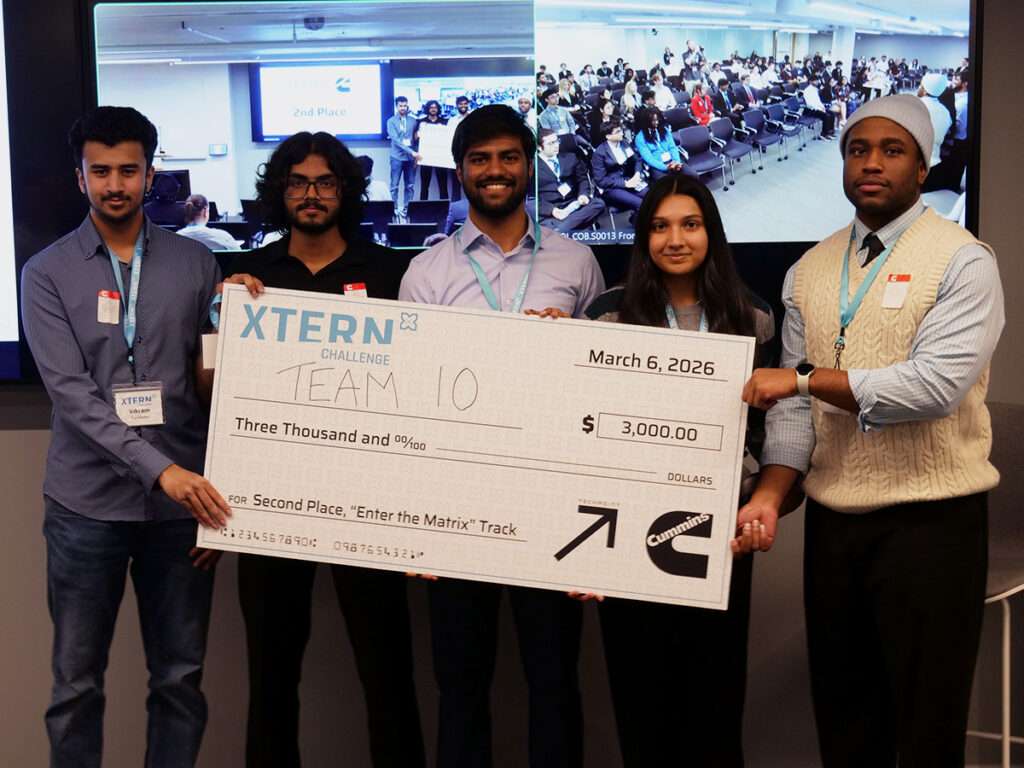
Third Place
Avani Kabra (Purdue University), Sahmey Raiyan Khan (DePauw University), Allen Merrill (University of Indianapolis), Srihitha Tangudu (Indiana University Indianapolis)
Team 1 placed third with Procurefy, a multi-agent purchase order automation system designed to streamline procurement workflows and support faster, more consistent decision-making while keeping humans in the loop. Their solution tackled a highly manual business process and showed how agentic AI could reduce repetitive work while improving efficiency and consistency.
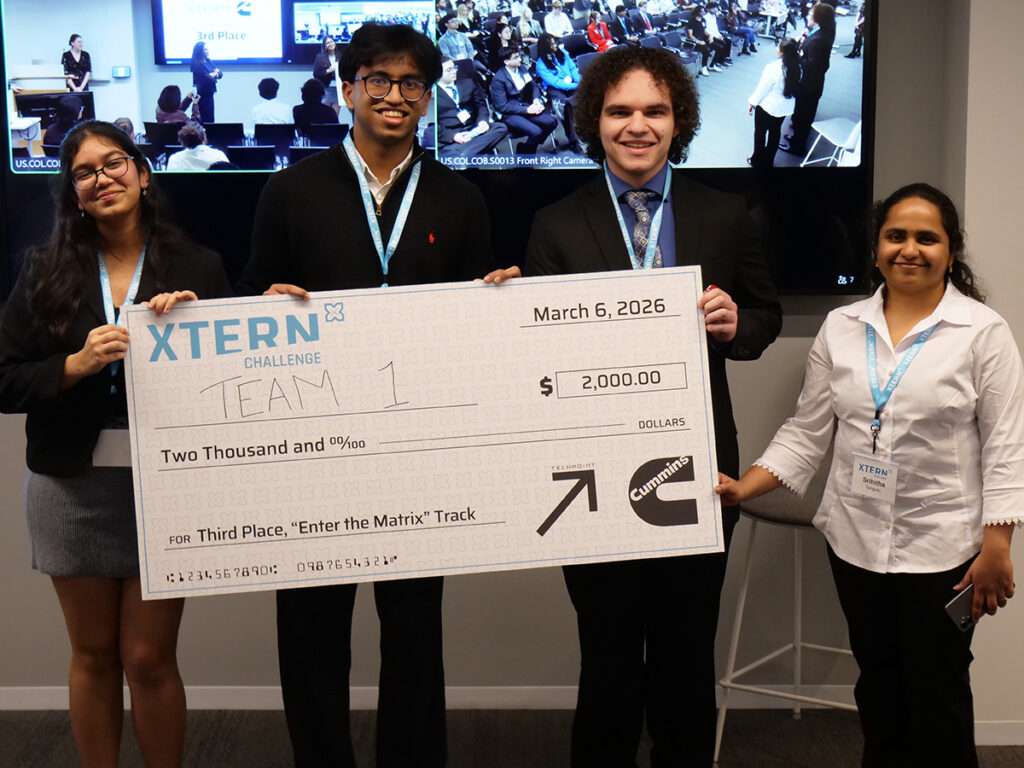
Honorable Mentions
Service Engineering Reboot
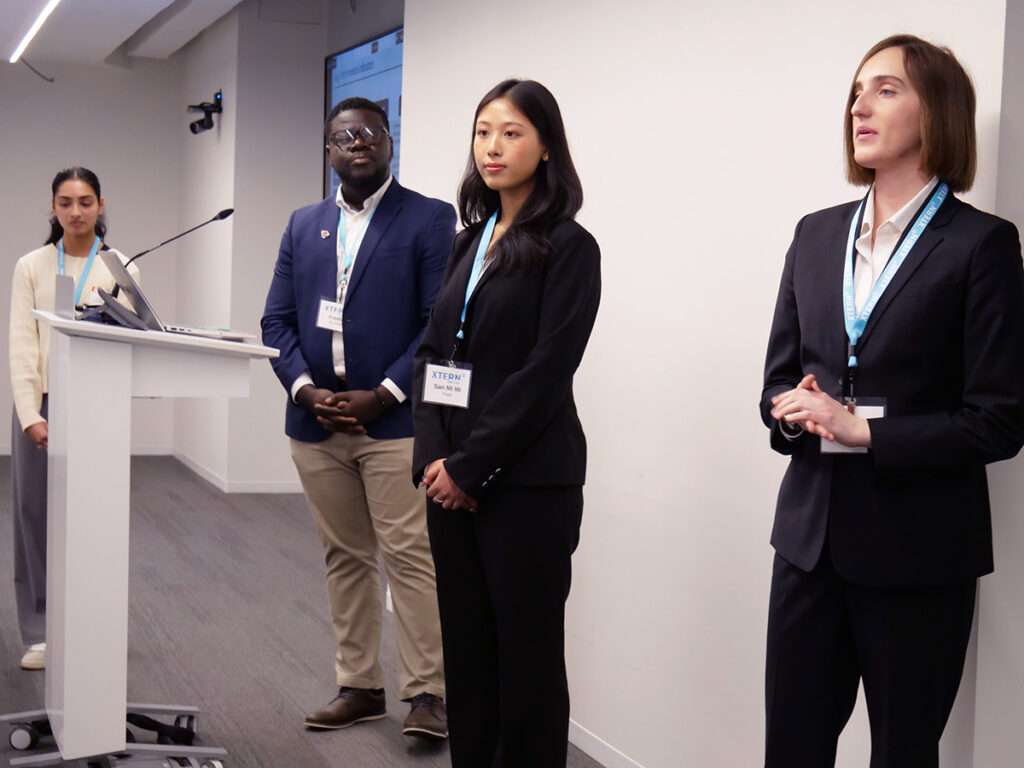
Ramani Satishkumar (Purdue University Indianapolis), Freddy Da-silveira (Ball State University), San Mi Mi Thant (Indiana University Bloomington), Colleen Busher (Rose-Hulman Institute of Technology)
Team 12 was recognized for PMAdapt, an adaptive maintenance checklist system designed to help junior technicians think more like senior technicians through AI-guided diagnostics and supervisor-supported escalation.
Enter the Matrix
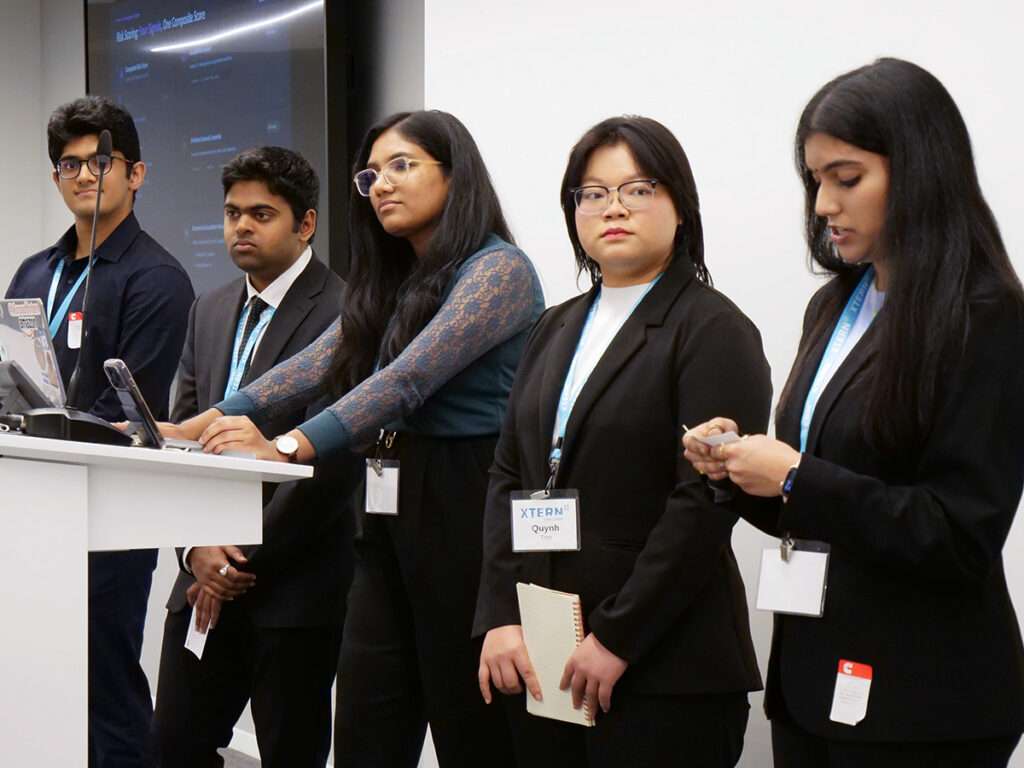
Vihaan Pradeep (Purdue University), Monish Malla (Indiana University Bloomington), Sahi Maldoddi (Indiana University Indianapolis), Quynh Tran (DePauw University), Joshika Sathyamathan (Purdue University)
Team 5 was recognized for SupplyGuard, a multi-agent supply chain risk monitoring system designed to help teams identify disruptions earlier, assess supplier risk, and make more proactive decisions.
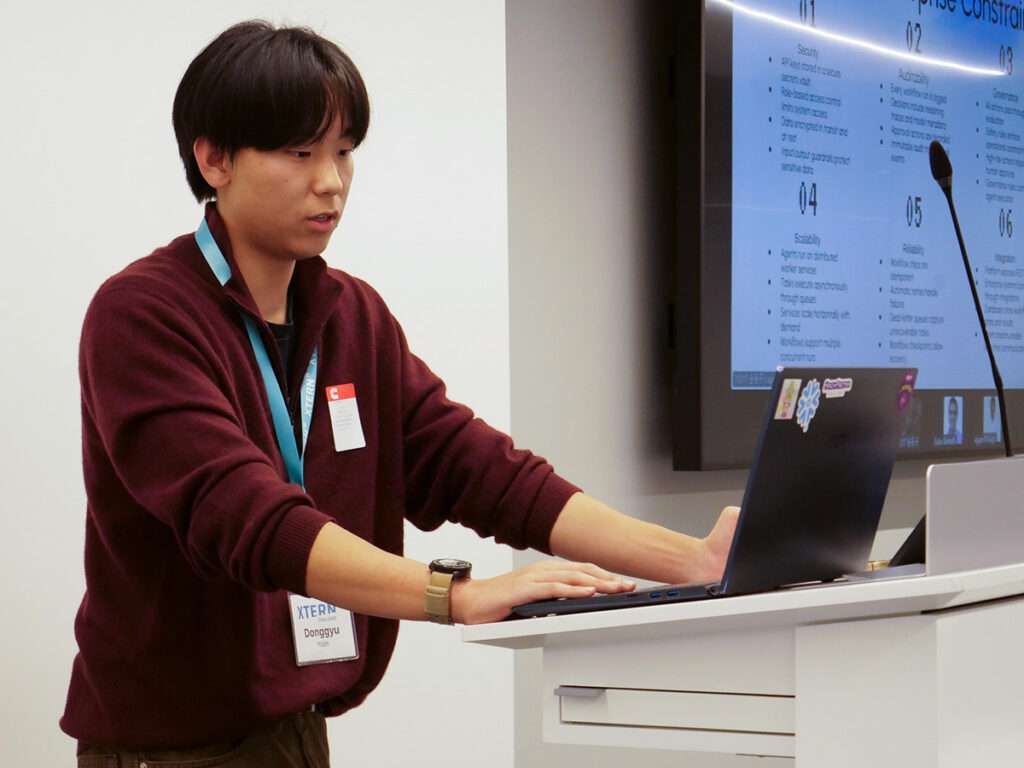
Donggyu Yoon (Purdue University)
Team 6 was recognized for Orange Lantern, an AI-powered supplier reliability and disruption-alert platform built to monitor vendor performance, flag risk, and support faster supply chain decisions. Due to late conflicts, Yoon developed and presented his project by himself.
Beyond XTERN Challenge
TechPoint also recognizes the Cummins professionals who helped make the experience possible, including the company’s presenters and judges, who shared their time and expertise with students throughout the challenge and on presentation day.
At its core, Xtern Challenge is about more than a single event. In an economy where AI is changing how entry-level experience is built, students need more opportunities to work on real problems, build practical judgment, and gain exposure to the kind of collaboration employers value most.
The Cummins challenge shows what is possible when organizations design these experiences with intention, giving students meaningful work while helping rebuild the pathway from education to opportunity in Indiana’s digital economy.
Keep Reading
Rebuilding the Experience Ladder in an AI Economy →
How Indiana Can Lead in the Age of AI →
More From TechPoint
Learn how AI is changing early-career hiring in AI Amplifies Need to Address Talent Gap →
Explore data, insights, and actionable frameworks in AI-Driven Skills for Indiana’s Economy →