Readiness to Results in the Age of AI: Four Imperatives for 2026
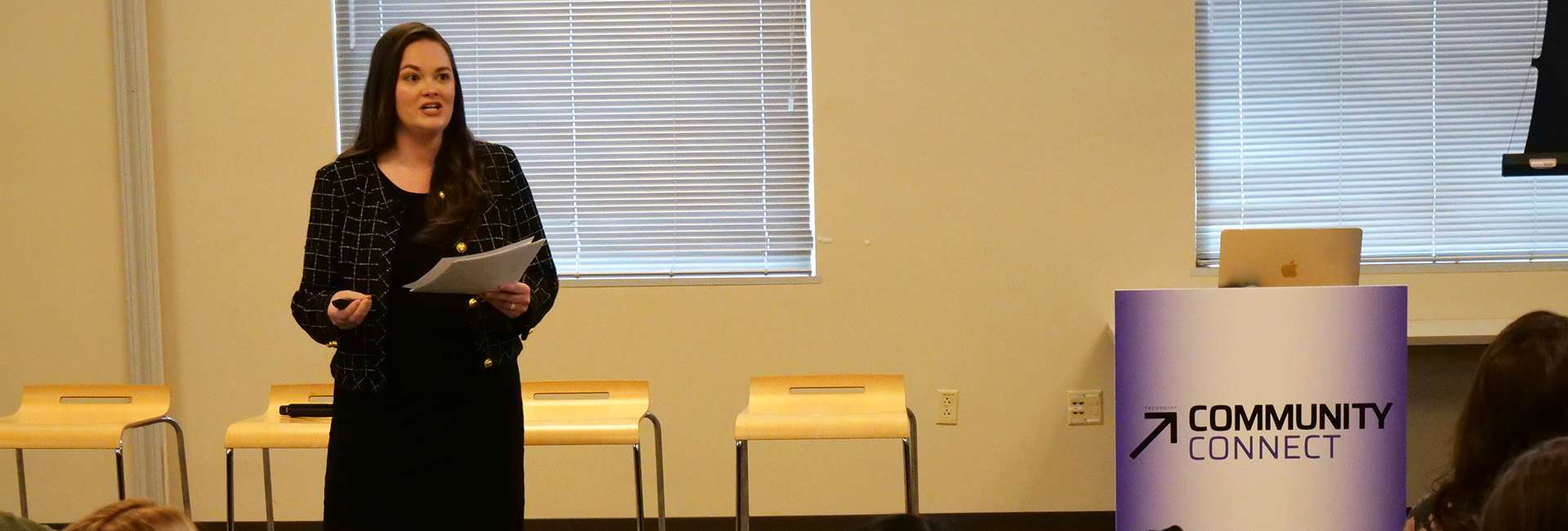
At TechPoint’s Community Connect hosted by IU Health, TechPoint VP of Innovation & Entrepreneurship Chelsea Linder delivered a clear message for leaders navigating AI adoption in 2026: most organizations aren’t stuck because the technology is insufficient. They’re stuck because the foundations underneath it are not ready.
Her keynote outlined four imperatives that separate companies generating real business value from those remaining stuck in pilot mode: making data readiness a competitive advantage, building a workforce AI can’t replace, smart innovation, and investing in infrastructure and sustainability.
Imperative 1: Data Readiness as a Competitive Advantage
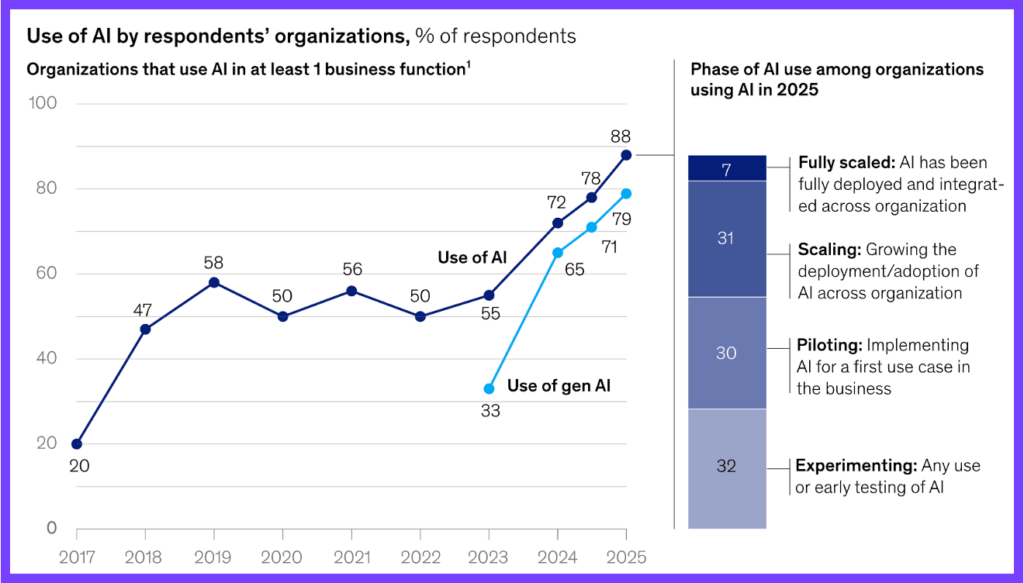
Chelsea opened with a reality check: many organizations are still struggling with basic questions—where their data lives, who owns it, and whether it can be trusted. The risk is real: without clarity and governance, teams stall when they try to scale AI beyond experimentation.
She emphasized that this challenge shows up differently across industries: sectors with heavier compliance and regulatory demands often have stronger data discipline, while “move fast” cultures can find that speed-first mindset becomes a constraint when AI requires trust, structure, and shared definitions. The practical takeaway is that data readiness isn’t “IT cleanup,” it’s what determines whether the business can move quickly with confidence or stays trapped in pilots.
“The first question leaders should be asking is not what tool should we use… Is our data ready to support this at scale?”
She cited the following statistics:
- Forbes Tech Council: Up to 85% of data projects fail because of data issues.
- Gartner: 60% of AI-ready projects are abandoned without AI-ready data.
- Fivetran: 42% of enterprises report that more than half of AI projects are delayed, underperform, or fail due to data readiness issues.
In 2026, Chelsea framed data readiness as the differentiator: organizations with clear, connected, well-governed data move faster and generate value; those without it burn cycles on pilots and rework. In her framing, “ready” data means people can confidently reuse it across teams and workflows without constantly debating accuracy, ownership, and definitions.
Imperative 2: Building the Workforce AI Can’t Replace
Once data is in place, Chelsea argued the next constraint is people, not technology. Many organizations deploy AI tools quickly but struggle to realize value because their workforce isn’t prepared to use them effectively. She stressed that this is not just an IT upskilling problem. The impact is showing up in everyday business functions like finance, operations, HR, customer service, and sales.
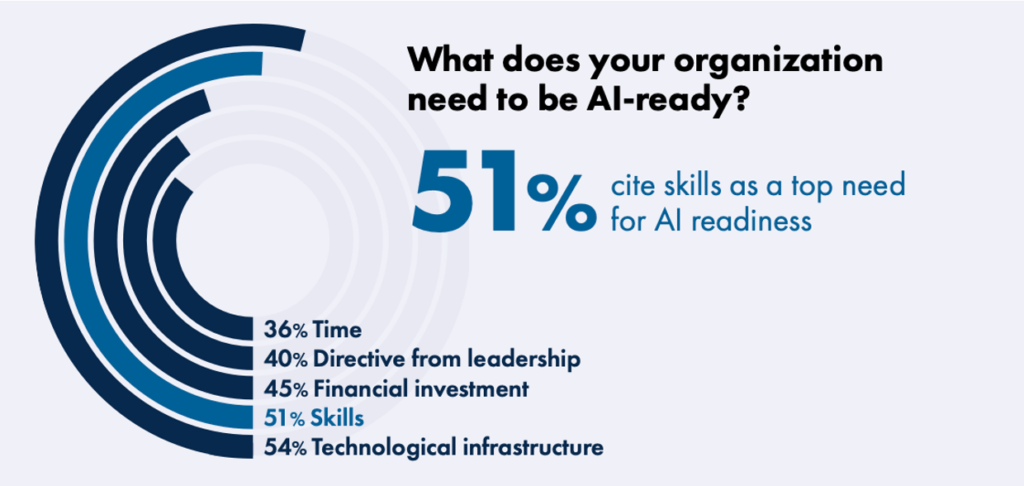
When tools land on top of already-full workloads, transformation competes directly with execution unless leaders deliberately invest in training, adoption support, and workflow redesign. Her underlying point: capability and confidence are as critical as access to tools.
“Organizations adopt AI tools quickly, but struggle to realize real value because their workforce is not prepared.”
She cited the following statistic:
- AI-Driven Skills for Indiana’s Economy: 450M+ workers globally will require AI-related upskilling by 2030.
She emphasized AI’s impact is showing up across everyday business functions—finance, operations, customer service, HR, and sales—yet many roll out tools without sufficient training, governance, or change management.
“The smarter strategy is not replacing people with AI. It is augmenting people with AI.”
She emphasized AI’s impact is showing up across everyday business functions, like finance, operations, customer service, HR, and sales. Yet many roll out tools without sufficient training, governance, or change management. In practice, that means organizations end up with “tool availability” but not “tool effectiveness,” because the systems, skills, and trust to use AI well haven’t been built into day-to-day work.
Imperative 3: Smart Innovation
Chelsea’s third imperative was pragmatic: for most organizations, especially SMBs, the best innovation strategy is not building custom AI from scratch. It’s making disciplined decisions about what to buy, what to integrate, and who to partner with.

She positioned this as a speed-and-risk tradeoff: mature platforms can help teams move faster and reduce uncertainty, but only if leaders set clear criteria and implement with focus. The real separator isn’t who adopts the most technology—it’s who aligns AI investments to specific business outcomes and follows through with disciplined execution.
“Most organizations don’t need to build a new language model.”
She argued the differentiator isn’t how much technology an organization adopts—it’s whether leaders have a clear implementation strategy. Her practical test: does it integrate with your data, will your workforce use it, and does it solve a real business problem? In her framing, “smart innovation” means resisting tool churn and staying anchored to outcomes like better forecasting, workflow automation, decision support, and improved customer experience.
Imperative 4: Infrastructure and Sustainability
Chelsea closed with the hard truth: AI is not virtual. It runs on physical infrastructure with real constraints—especially energy and water—and those constraints increasingly shape cost and competitiveness.
“AI is not virtual. It runs on physical infrastructure, and that infrastructure has real environmental costs.”
She cited the following statistics:
- IOT: ~$125B invested in 2024 AI data center infrastructure.
- IOT: Projected global investment of ~$2.8T by 2030.
Her point: responsible AI adoption means understanding not only what AI can do, but what it requires, and aligning growth with long-term environmental resilience.
Closing: Responsible Readiness is the Strategy
Chelsea’s four imperatives form a practical readiness checklist for 2026. Organizations that win won’t be the ones chasing every new tool—they’ll be the ones that invest in connected data, prepared people, disciplined implementation, and infrastructure-aware growth. The underlying leadership message is simple: build the foundations first, then scale what works.
More From Community Connect
Seizing the Moment: Turning Early Career Talent into Real Business Impact
TechPoint Releases 2025 Venture Report, Announces Deal of the Year Finalists for Mira Awards