Apply Your Skills to a Real Industry Challenge at MISO College students are often told they need experience to begin their careers. The problem is that gaining meaningful experience can be difficult before someone has landed that first professional opportunity. That experience gap is widening as artificial intelligence changes early-career work. Employers increasingly need people who can work through ambiguity, collaborate effectively and apply their knowledge in a real organizational setting. At the same time, many of the routine tasks that once helped new professionals build those abilities are being automated. Classroom learning remains essential, but students also need structured opportunities to use their knowledge while navigating real business needs, expectations and constraints. TechPoint created XTERN Challenge to provide that experience. Applications are now open for the next XTERN Challenge, taking place September 10–11 at Midcontinent Independent System Operator’s headquarters in Carmel. Students must apply by August 24. What is XTERN Challenge? XTERN Challenge is a series of work-based learning competitions where college students solve real business problems developed by Indiana companies. Unlike a traditional classroom project, each Challenge places students in a realistic professional environment. Participants work on cross-university teams, receive guidance and feedback from industry professionals and present their recommendations to company leaders. The experience allows students to demonstrate more than technical ability. They must manage their time, communicate with teammates, make decisions with incomplete information and turn their ideas into a useful final product. These are the kinds of capabilities employers increasingly value. TechPoint’s recent work on the talent experience gap found that employers need people who can produce outcomes amid ambiguity, while students need opportunities to develop the judgment and context that come from doing meaningful work. XTERN Challenge creates a structured environment in which students can begin building that experience. What should students expect from the MISO Challenge? MISO manages the electricity superhighway across the central United States, helping ensure reliable power for 45 million people. Its employees operate the electric grid, manage an energy market and plan for the industry’s future through technology and research. For this Challenge, 50 students will be selected and assigned to balanced teams made up of students from different universities and academic backgrounds. Teams will be notified by August 28 and will then have approximately two weeks to collaborate virtually, participate in check-ins and develop their solutions. Participants will come together at MISO’s Carmel headquarters on September 10 for a full day of project work, mentorship and networking. On September 11, teams will finalize their work and deliver presentations to a panel of MISO judges. MISO hiring managers and executives will be involved throughout the experience. The Challenge is designed to give students an inside look at the company while allowing MISO to identify potential candidates for future internships. Students should approach each stage as part of a professional recruiting experience. Choose between two real industry prompts Applicants will indicate which of two MISO business problems most closely aligns with their interests and skills. Intelligent Navigation of MISO’s Public Information Teams will explore how MISO can use artificial intelligence to make its public data easier to find, access and understand. Participants will build a working AI tool that helps users locate information on MISO’s website while reducing routine requests received by its data request and external affairs teams. This prompt may be a strong fit for students studying or experienced in: Artificial intelligence and large language models Computer engineering Computer science Data science Software engineering Large Loads Teams will examine the rapid growth of large energy users across MISO’s service area. Using a synthetic dataset, participants will analyze energy-use trends and recommend how MISO should respond while preserving the reliability of the electrical grid. This prompt may be a strong fit for students interested in: Artificial intelligence Computer engineering Computer science Data science Energy policy Economics, mathematics, statistics or public policy Students do not need to be energy-industry experts. Curiosity, research skills and an interest in policy, strategy or game theory will be valuable, particularly for the Large Loads prompt. Who is eligible to apply? Applicants must: Be currently enrolled in an undergraduate or graduate program Be at least a sophomore if enrolled as an undergraduate Be available for both full in-person Challenge Days in Carmel on September 10 and 11 Be able to participate in virtual team activities and complete project work before the in-person event Be authorized to work in the United States without current or future employer sponsorship Students attending colleges outside Indiana may also be considered if they are currently working in Indiana, including through a co-op experience. Frequently asked questions Do students apply individually or as a team? Students apply individually. Applicants will identify their skills and experience, then TechPoint will create balanced teams that include students from different universities and areas of study. Do participants need to attend both days? Yes. All participants must attend in person at MISO’s Carmel headquarters on September 10 and 11. Teams must also collaborate virtually before the event. How much work happens before September 10? Teams will have approximately two weeks to develop their projects and should arrive at MISO with most of the work completed. Virtual check-ins will help participants learn about MISO and the energy industry, ask questions and receive feedback. What equipment and tools are required? Students will use their own computers and the tools available to them. Public APIs, existing datasets and student, free or paid software licenses may be used as long as teammates have reasonably similar access. Teams must cite their sources and document their methods. Can teams use generative AI? Yes. AI tools and large language models are permitted and encouraged. Participants must be transparent about which tools they used and clearly explain where their own ideas, judgment and creativity shaped the final work. What can participants win? Winning teams will split $10,000 in prize money: First place: $5,000, or $1,000 per team member Second place: $3,000, or $600 per team member Third place: $2,000, or $400 per team member All teams will be evaluated using the same rubric, regardless of which prompt they select. Are meals, transportation and housing included? Breakfast and lunch will be provided on both Challenge Days. Students who need transportation assistance or housing support should contact TechPoint at x@techpoint.org. Housing is limited to students traveling more than 50 miles. What happens after the Challenge? Student resumes and team submissions will be shared with MISO for consideration for future opportunities. Participants will also join the TechPoint Alumni program, which provides continued access to networking, events and career opportunities. Regardless of the competition results, participants will leave with a substantive project they can discuss in interviews and potentially feature in a portfolio or on a resume. Apply by August 24 Applications close August 24. Students should have a polished resume reviewed by their university’s career services office before applying. Learn more and apply for the MISO XTERN Challenge. This feels really long. I do want it to explain what the Challenge is (and why) but it's really just a way to get kids to apply. Agreed. The previous version reads like a resource page, not a recruitment article. I’d keep the purpose brief, lead with the opportunity and answer only the questions students need before applying. Put Your Skills to Work in the MISO XTERN Challenge College students are often expected to have experience before landing their first professional opportunity. XTERN Challenge helps close that gap by giving students a chance to apply what they are learning to a real business problem, work alongside industry professionals and demonstrate their skills to a potential employer. Applications are open for the next XTERN Challenge, taking place September 10–11 at Midcontinent Independent System Operator’s headquarters in Carmel. Fifty students will be selected to compete for $10,000 in prize money and connect directly with MISO hiring managers and executives. Applications close August 24. What is XTERN Challenge? XTERN Challenge is a work-based learning competition where college students collaborate in teams to solve real problems developed by Indiana companies. Employers increasingly need early-career professionals who can navigate ambiguity, collaborate and turn their knowledge into results. However, the entry-level experiences that help students build those skills are becoming harder to find. XTERN Challenge gives students a structured opportunity to gain that experience while showing a potential employer what they can do. For the upcoming Challenge, participants will be placed on cross-university teams and given approximately two weeks to develop a solution for one of two problems facing MISO and the energy industry. Teams will then spend two days at MISO refining their work, meeting company leaders and presenting to a panel of judges. Choose Your Challenge Students may apply for one of two prompts: Intelligent Navigation of MISO’s Public Information: Build an AI-powered tool that helps people more easily find and use public data on MISO’s website. Large Loads: Analyze a synthetic dataset showing rising energy use and recommend how MISO should respond while protecting the reliability of the electrical grid. The Challenge is especially relevant for students studying data science, computer science, computer engineering, artificial intelligence, software engineering, statistics, mathematics, economics, energy policy or public policy. Experience with Python or AI tools and an interest in strategy, policy or the energy industry may also be valuable. Students do not need previous energy-industry experience to apply. Who is eligible? Applicants must: Be currently enrolled in an undergraduate or graduate program Be at least a sophomore if enrolled as an undergraduate Be authorized to work in the United States without current or future employer sponsorship Be available in Carmel all day September 10 and 11 Be able to complete virtual team work before the in-person Challenge Students attending colleges outside Indiana may be considered if they are currently working in Indiana, including through a co-op. What else should applicants know? Students apply individually, and TechPoint will create balanced teams based on applicants’ skills and experience. Teams will be notified by August 28. Participants will use their own computers and may use AI tools, public datasets and other available resources as long as they document their methods and sources. Breakfast and lunch will be provided during both in-person days. Limited housing assistance may be available for students traveling more than 50 miles. Winning teams will share $10,000 in prizes, but the opportunity extends beyond the competition. MISO will receive participants’ resumes and project submissions as it considers candidates for future internships. Every participant will also leave with hands-on experience, new professional connections and a substantive project to discuss in future interviews. Apply by August 24 A polished resume is required to apply. Students should have their resume reviewed by their university’s career services office before submitting it. Learn more and apply for the MISO XTERN Challenge. Can you write alt text for this image A student presents a team project on a laptop as fellow XTERN Challenge participants and a MISO professional look on.

College Students Can Gain Real-World Experience Through MISO XTERN Challenge

College students can apply their skills to a real energy-industry challenge, meet MISO hiring managers and compete for a share of $10,000 in prizes.
Two coworkers review information together on a tablet in a modern office.

TechPoint Expands Adult Apprenticeship Pathways for Indiana Employers and Future Tech Talent

TechPoint is expanding Adult Apprenticeship to help Indiana employers widen their talent pipelines while giving adults paid, work-based pathways into high-demand tech careers.
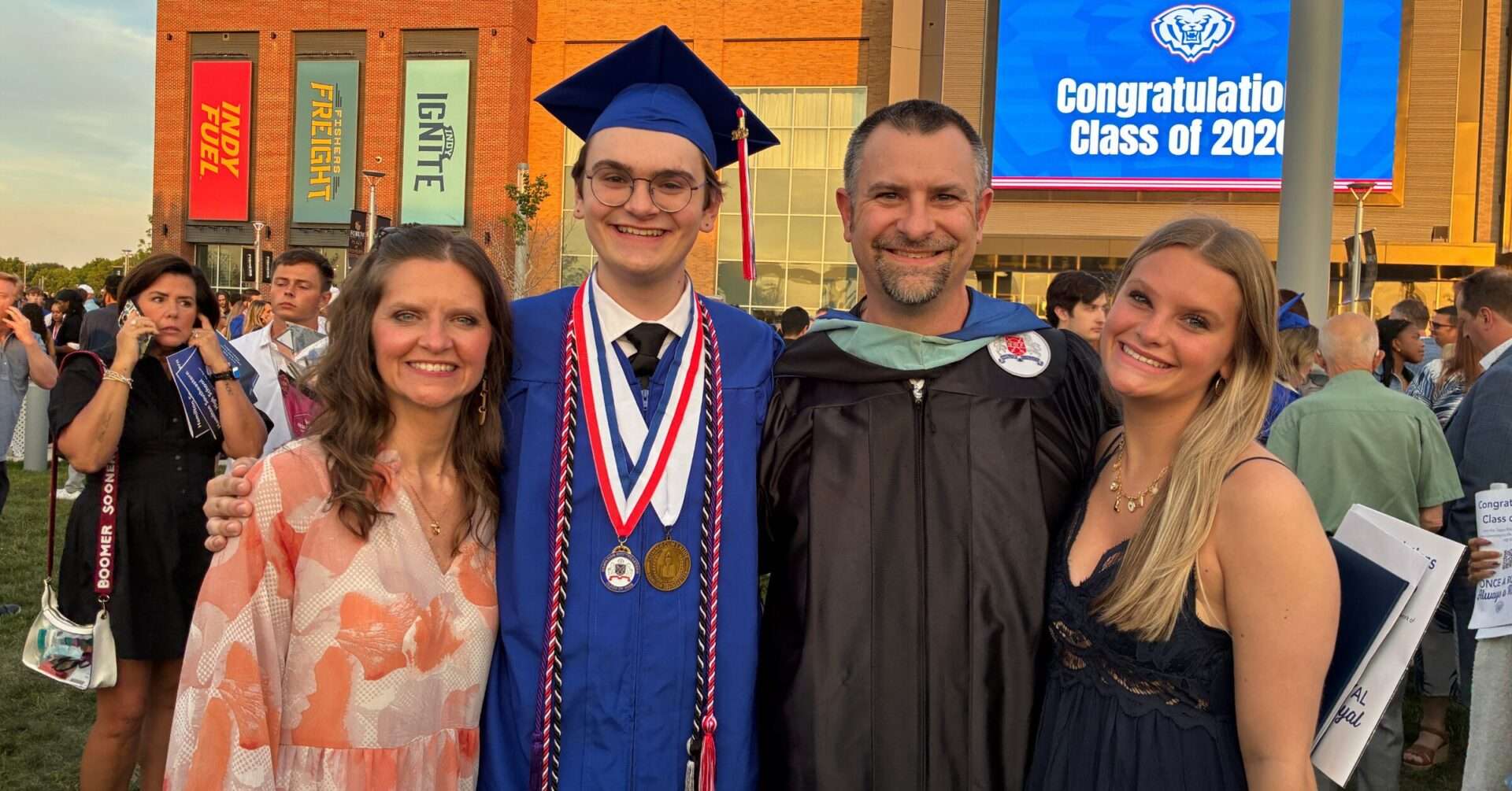
Nick Fishel stands with family at son's high school graduation.

One Opportunity at a Time: Nick Fishel’s Journey to Computer Science

Nick Fishel never planned to become a computer science teacher. Now a Mira Awards finalist for Nextech CS Teacher of the Year 2026, he shares how a winding path from the private sector to the classroom led him to build a program at Hamilton Southeastern High School, and why staying curious matters more than having all the answers.
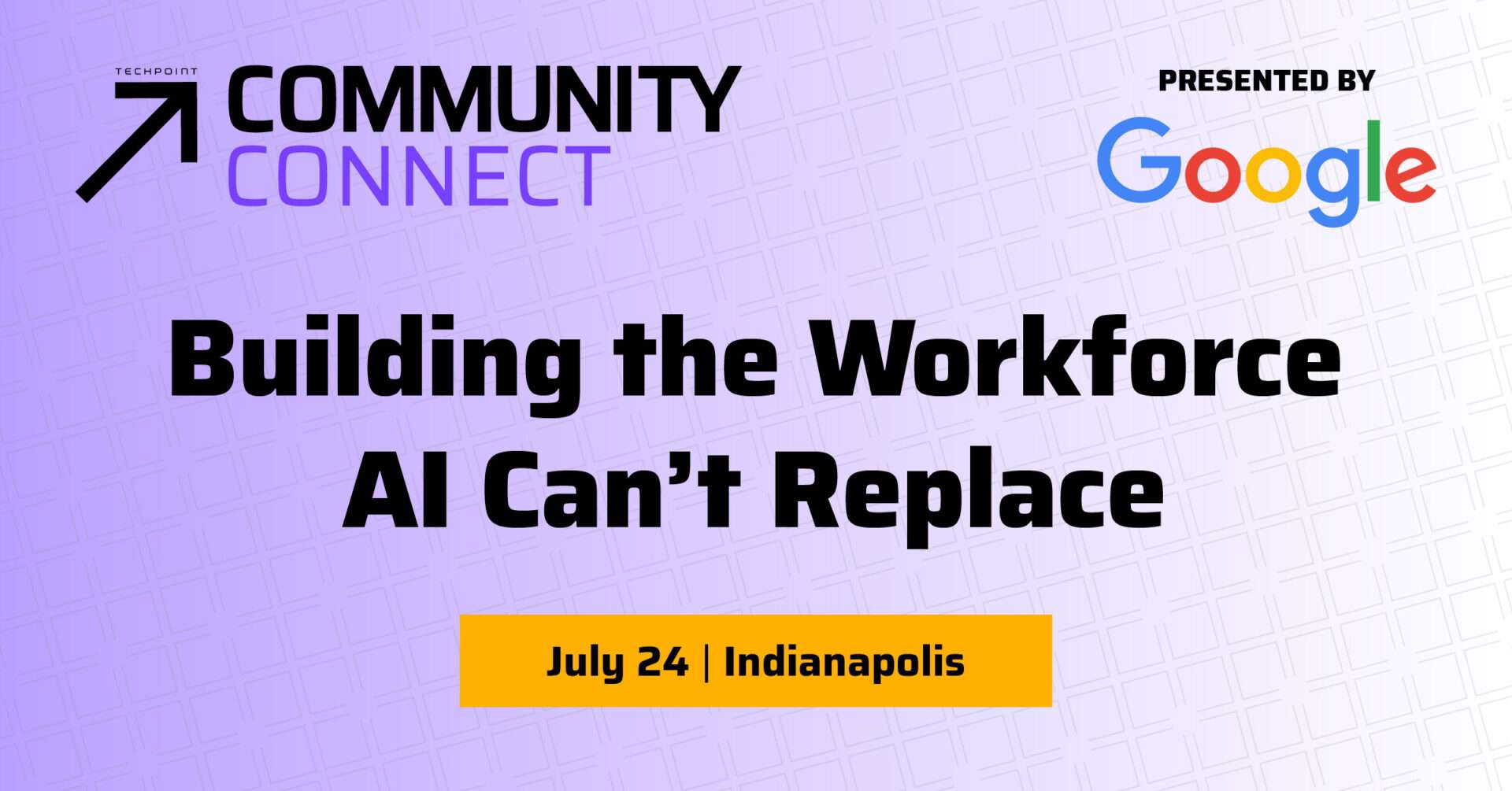
Promotional graphic for TechPoint Community Connect, presented by Google. The graphic features the Community Connect logo and the headline “Building the Workforce AI Can’t Replace” on a light purple patterned background. Event date and location are listed as “July 24 | Indianapolis.” Google is displayed as the presenting sponsor.

Community Connect to Explore Building a Workforce AI Can’t Replace

This Community Connect event, presented by Google, brings together Indiana employers, educators and emerging talent to explore AI adoption, workforce readiness and the skills that will matter most in the years ahead.
Hylaine banner

What is AI Inference? Why It’s the Real Enterprise Challenge Nobody’s Talking About

Most enterprises do not need to train foundation models from scratch. The real challenge is making AI inference work reliably, affordably, and at scale within existing infrastructure, cost constraints, and operational realities.

Case Study: Beyond Code Generation: How SEP Uses AI Across the Software Delivery Process

This Indiana AI Innovation Network case study explores how SEP is applying AI beyond code generation to improve planning, analysis, testing, reviews, and delivery across the software lifecycle.

Case Study: How Baker Hill Used AI to Boost Employee Efficiency by 30%

This Indiana AI Innovation Network case study explores how Baker Hill used a structured AI strategy to improve employee efficiency while balancing adoption, governance, compliance, and risk management.

Artificial Intelligence: What Business Leaders Need to Know

Research Completed by Burak Kulli, Alli McCrady, Emmanuel Quainoo, Alya Vasilevskaya Artificial Intelligence (AI) has emerged as a revolutionary force that is transforming every sector of society. This comprehensive overview covers key concepts, applications, legal issues, and market trends related to AI.  AI encompasses a range of technologies, including machine learning, deep learning, and neural […]